
📢 CONTACT US FOR A FREE AUDIT, CONSULTATION, OR BRAND ANALYSIS. WE WANT TO HELP HOWEVER WE CAN 🏁 BUILD YOUR BRAND, SELL THE WOW FACTOR, AND LET US DO THE THINKING AHEAD 🧠
📢 CONTACT US FOR A FREE AUDIT, CONSULTATION, OR BRAND ANALYSIS. WE WANT TO HELP HOWEVER WE CAN 🏁 BUILD YOUR BRAND, SELL THE WOW FACTOR, AND LET US DO THE THINKING AHEAD 🧠
📢 CONTACT US FOR A FREE AUDIT, CONSULTATION, OR BRAND ANALYSIS. WE WANT TO HELP HOWEVER WE CAN 🏁 BUILD YOUR BRAND, SELL THE WOW FACTOR, AND LET US DO THE THINKING AHEAD 🧠
Unlock Growth: Your Guide to Digital Marketing Strategy Consulting
Unlock Growth: Your Guide to Digital Marketing Strategy Consulting
8 minutes read - Written by Nextus Team
Marketing
Consulting
Guide
Explainer

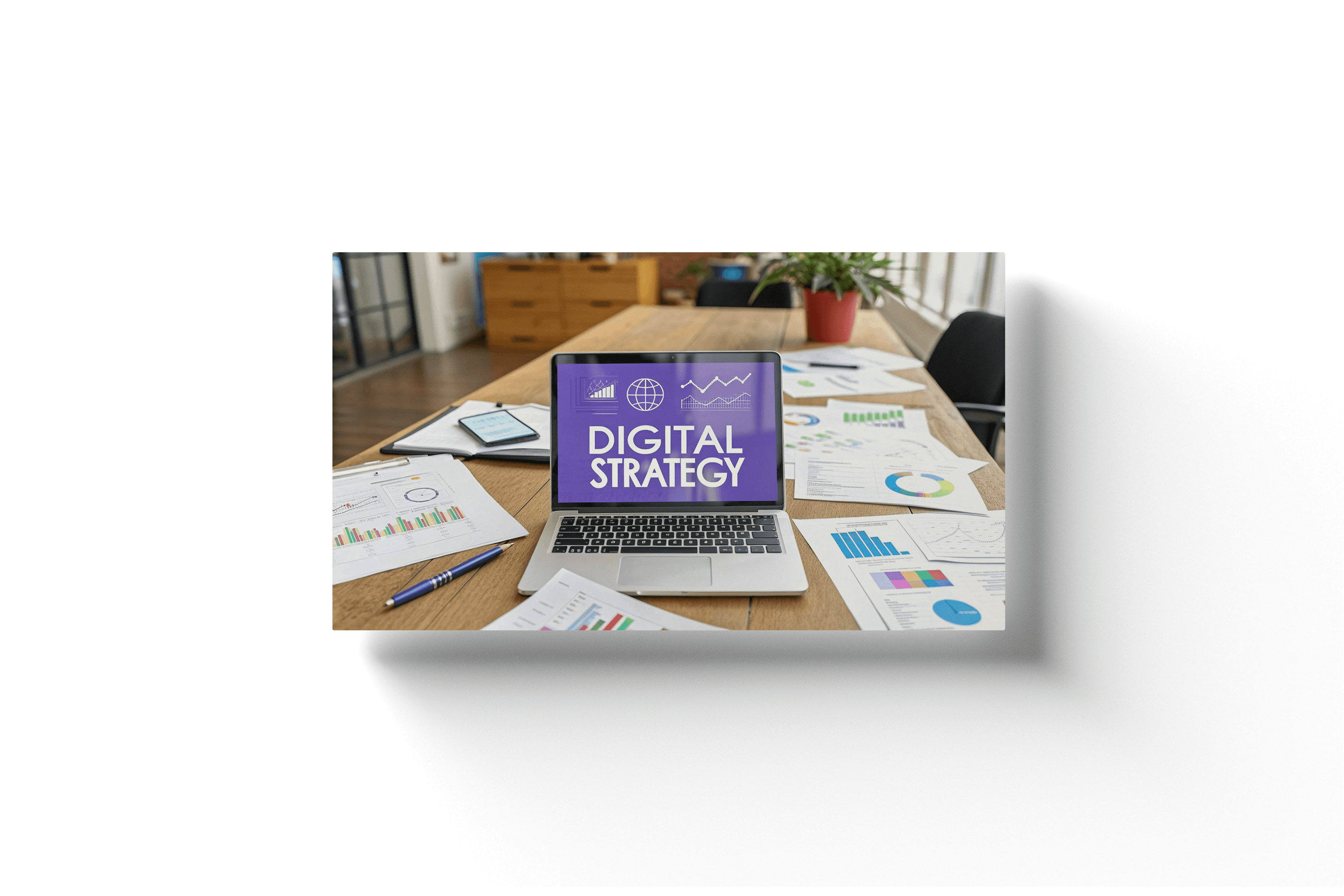
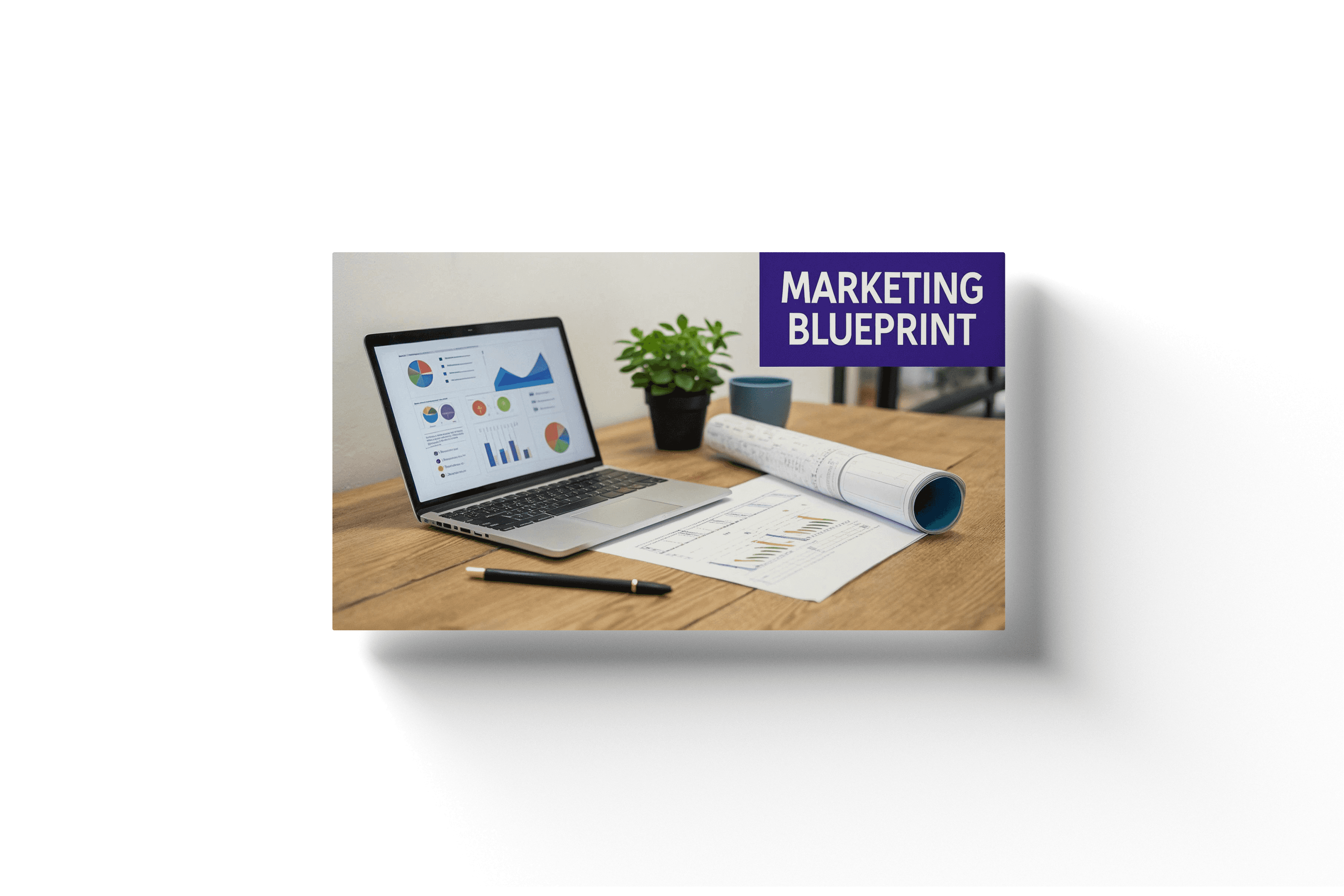
Ever heard the saying, "Failing to plan is planning to fail?" It's a cliché for a reason, especially in the fast-paced world of digital marketing. Digital marketing strategy consulting is the process of bringing in an expert to architect a high-level, actionable blueprint for your online growth.
Think of it like hiring an architect before building a house. You wouldn't just start throwing up walls and hoping for the best, right? A consultant is that architect, ensuring every marketing activity—from a complex SEO campaign to your latest social media post—works in harmony to achieve your specific business goals.
What Digital Marketing Strategy Consulting Really Means
Imagine trying to build that house without a blueprint. You could buy the best materials and hire skilled carpenters, but you'd still end up with a confusing, unstable mess. That's precisely what marketing without a strategy feels like: a collection of disconnected actions that burn cash without delivering predictable results.
A marketing consultant provides that essential blueprint. They act as your expert architect, digging into your goals, your market, and your resources to design a unified plan. This approach turns random acts of marketing into a powerful, goal-driven engine for growth.
And businesses are catching on. The global marketing consulting market is booming, with forecasts showing it will grow by roughly $40.7 billion between 2024 and 2029. That’s a 4.5% compound annual growth rate. Why? Because companies realize that data-driven plans are the only way to create a superior customer experience. For a deeper dive, you can check out the full market analysis from Technavio.
From Scattered Tactics to a Cohesive Plan
So many businesses fall into the "tactics-first" trap. They run a Facebook ad here, publish a blog post there, or tweak their website on a whim. None of it is connected to a bigger picture. A digital marketing strategy consultant flips that model on its head, providing the clarity needed to make every action count.
Here’s an actionable look at how a consultant shifts a business’s approach from random actions to a unified, results-oriented plan.
Common Marketing Tactic | Strategic Consultant's Approach | Business Outcome |
|---|---|---|
Boosting random social media posts. | Developing a content calendar based on audience research and seasonal buying trends. | Consistent engagement, stronger brand loyalty, and sales from social channels. |
Writing blog posts about anything. | Performing keyword research to create pillar content that targets customer pain points. | Higher search engine rankings, more qualified organic traffic, and leads. |
Running generic Google Ads. | Building targeted ad campaigns with specific landing pages and A/B tested ad copy. | Lower cost-per-acquisition (CPA) and a higher return on ad spend (ROAS). |
The consultant’s job is to eliminate guesswork and lay out a clear, data-informed roadmap. They ensure every dollar you spend and every hour you invest pushes your business toward a measurable outcome—more leads, higher sales, or a stronger brand. If you're struggling to connect tactics to results, our team at Nextus can help build a plan that delivers.
Instead of just telling you what to do, a great consultant explains why you're doing it. They connect a specific action, like improving your local SEO, to a business goal, like getting more phone calls from customers in your service area.
That kind of clarity is what separates a forgettable business from a powerful brand. To see what this looks like in the real world, take a look at our guide on top digital marketing strategy examples to boost results.
The Role of Branding and Web Design
A powerful marketing strategy needs a solid foundation. That foundation is composed of two critical parts: your brand identity and your website. An expert consultant knows to start here, ensuring your core message is crystal clear before they try to amplify it.
Working with a Brand Identity Agency helps you define who you are, what you stand for, and how you communicate with your audience. This consistency builds trust and recognition. Simultaneously, your website is your digital storefront. A firm that excels in Web Design Naples FL, like Nextus, can build a site that isn't just visually appealing—it's engineered to convert visitors into customers.
Getting these foundational pieces right is the first actionable step toward a marketing strategy that genuinely works.
What a Digital Marketing Consultant Actually Does
It’s easy to think of a consultant as someone who just gives advice, but a true digital marketing consultant delivers a tangible, data-driven roadmap for growth. Their entire purpose is to cut through the fog of uncertainty and replace guesswork with a predictable system for attracting and converting customers.
They are strategic thinkers who connect every marketing effort back to a clear business goal. Think of them as part detective, part engineer, and part guide. They investigate what’s broken, engineer a better system, and then guide your team on exactly how to operate it for long-term success.
Uncovering Opportunities with Deep-Dive Audits
The first actionable step any good consultant takes is a deep-dive audit of your entire digital presence. This isn’t a quick glance at your homepage; it’s a full forensic analysis designed to uncover hidden opportunities and critical weaknesses. For example, a thorough SEO (Search Engine Optimization) audit reveals exactly why you aren’t appearing on Google for the keywords that drive business.
SEO is the practice of making your website more visible when people search for what you offer. The audit might uncover technical issues like slow page speeds, a lack of authoritative backlinks (links from other websites), or content that fails to connect with your ideal customers. By identifying these root problems, the consultant can build an actionable plan to fix them and systematically climb the search rankings. The same process applies to social media or content audits—it’s about finding what your audience loves and what they ignore. If you suspect your SEO is underperforming, Nextus can conduct a comprehensive audit to pinpoint the issues.
Crafting a Content Strategy That Attracts Customers
Once they understand the landscape, the consultant develops a content strategy. This is much more than brainstorming blog topics. It's about creating genuinely valuable information that attracts, engages, and ultimately converts your ideal customer.
They map out content that solves specific problems for people at every stage of their buying journey. A small business might be posting randomly, hoping something sticks. A consultant flips that, creating a structured plan—perhaps a series of articles built around a core "pillar page" on a key service. This move immediately positions the business as an authority and creates a web of internal links that search engines favor.
A consultant’s goal is to turn your website and social channels into assets that generate leads on autopilot, rather than digital billboards that you have to keep paying for.
This strategic shift drives real, sustainable growth. The global digital marketing market is expected to hit $472.5 billion by 2025, and with a staggering 84% of Chief Marketing Officers admitting they struggle to execute their strategies, the need for an expert hand is obvious.
Optimizing the User Journey and Paid Media
Getting people to your website is only half the battle. A consultant will also focus on CRO (Conversion Rate Optimization)—the art and science of turning more visitors into actual customers. They analyze user behavior on your site to find friction points like confusing navigation or a clunky checkout process, then test solutions to streamline the experience.
This detailed optimization is crucial for paid media campaigns on platforms like Google and Facebook. A consultant ensures your ad dollars aren't wasted on the wrong audience or on ads that don't connect. They fine-tune every part of the campaign to maximize profitability, obsessing over metrics like ROAS (Return on Ad Spend).
Scaling Efforts with Smart Automation
Finally, a modern digital marketing consultant will identify ways to put your growth on autopilot with smart automation. A huge part of a consultant's job involves not just running strategies but also getting new clients by writing compelling business proposals. Once on board, they immediately search for ways to make your operations more efficient.
Tools like n8n or Zapier can connect your different applications and automate repetitive busywork, allowing your team to scale without increasing headcount. This could involve automatically routing new leads to the right salesperson or sending personalized follow-up emails. By building these efficient workflows, which is a specialty at Nextus, a consultant frees up your team to focus on the high-impact work that truly moves the needle.
The Consulting Process: From Discovery to Optimization
Hiring a digital marketing strategy consultant shouldn't feel like handing over a check and hoping for the best. A true professional follows a transparent, actionable process that transforms a vague expense into a powerful, collaborative partnership.
The journey is well-defined, ensuring every step is purposeful, measurable, and tied directly to your business goals. It generally unfolds in four distinct phases: a deep dive into your current state, building a custom blueprint for your future, guiding the execution, and finally, creating a cycle of continuous improvement.
Phase 1: Discovery and Audit
This is the detective work. A good consultant begins by digging deep into your entire digital footprint to get a complete picture. This isn’t just a quick look at your homepage; it’s a full-blown audit of your data, competitors, and how your marketing is really performing.
They'll analyze your website analytics to see what visitors do, run an SEO audit to figure out why you’re not ranking, and review your social media to see what truly connects with your audience. At the same time, they're sizing up the competition to find your unique advantages. This data-gathering stage is foundational—every recommendation that follows is built upon these insights.
Phase 2: Strategy Development
With a clear map of your strengths, weaknesses, and hidden opportunities, the next step is building the blueprint. This is where the consultant architects your custom plan for growth, outlining specific, measurable, achievable, relevant, and time-bound (SMART) goals.
This isn't a simple list of tactics. A powerful strategy connects your big-picture business objectives to concrete marketing actions. It will clearly define your target audience, solidify your core messaging, and select the most effective channels to reach your customers.
A great strategy isn't just a collection of ideas; it's a cohesive system where every part works together. Your content plan feeds your SEO efforts, which in turn informs your paid ad campaigns. It all clicks into place for a much bigger impact.
The final deliverable from this phase is a clear roadmap. To get a better sense of what this involves, you can check out our comprehensive digital marketing strategy template, which details the core components of a winning plan.
Phase 3: Implementation Guidance
A brilliant plan is worthless if it just sits on a shelf. During the implementation phase, the consultant shifts from architect to project manager and coach. Their job is to work alongside your team or external vendors to bring the strategy to life, ensuring everyone is aligned and moving forward.
This could mean training your staff on a new tool, setting up analytics and tracking correctly, or providing creative direction for new ad campaigns. For instance, if a new website is a key part of the strategy, a consultant can help manage the build, ensuring the final site is perfectly aligned with your strategic goals. Nextus specializes in bridging this gap between strategy and execution seamlessly.
Phase 4: Reporting and Optimization
The final phase is an ongoing loop of measuring, learning, and refining. Digital marketing moves fast, so your strategy must be agile. The consultant will establish the key performance indicators (KPIs) that truly matter and set up regular reports—usually monthly—to track progress against the goals set in the strategy phase.
These reports cut through the noise. We're not talking about vanity metrics like "likes." We focus on numbers that impact your bottom line: lead quality, customer acquisition cost (CAC), and return on investment (ROI). Using this data, the consultant will pinpoint what's working and what's not, making smart recommendations to optimize the strategy for sustained, long-term growth.
Ever heard the saying, "Failing to plan is planning to fail?" It's a cliché for a reason, especially in the fast-paced world of digital marketing. Digital marketing strategy consulting is the process of bringing in an expert to architect a high-level, actionable blueprint for your online growth.
Think of it like hiring an architect before building a house. You wouldn't just start throwing up walls and hoping for the best, right? A consultant is that architect, ensuring every marketing activity—from a complex SEO campaign to your latest social media post—works in harmony to achieve your specific business goals.
What Digital Marketing Strategy Consulting Really Means
Imagine trying to build that house without a blueprint. You could buy the best materials and hire skilled carpenters, but you'd still end up with a confusing, unstable mess. That's precisely what marketing without a strategy feels like: a collection of disconnected actions that burn cash without delivering predictable results.
A marketing consultant provides that essential blueprint. They act as your expert architect, digging into your goals, your market, and your resources to design a unified plan. This approach turns random acts of marketing into a powerful, goal-driven engine for growth.
And businesses are catching on. The global marketing consulting market is booming, with forecasts showing it will grow by roughly $40.7 billion between 2024 and 2029. That’s a 4.5% compound annual growth rate. Why? Because companies realize that data-driven plans are the only way to create a superior customer experience. For a deeper dive, you can check out the full market analysis from Technavio.
From Scattered Tactics to a Cohesive Plan
So many businesses fall into the "tactics-first" trap. They run a Facebook ad here, publish a blog post there, or tweak their website on a whim. None of it is connected to a bigger picture. A digital marketing strategy consultant flips that model on its head, providing the clarity needed to make every action count.
Here’s an actionable look at how a consultant shifts a business’s approach from random actions to a unified, results-oriented plan.
Common Marketing Tactic | Strategic Consultant's Approach | Business Outcome |
|---|---|---|
Boosting random social media posts. | Developing a content calendar based on audience research and seasonal buying trends. | Consistent engagement, stronger brand loyalty, and sales from social channels. |
Writing blog posts about anything. | Performing keyword research to create pillar content that targets customer pain points. | Higher search engine rankings, more qualified organic traffic, and leads. |
Running generic Google Ads. | Building targeted ad campaigns with specific landing pages and A/B tested ad copy. | Lower cost-per-acquisition (CPA) and a higher return on ad spend (ROAS). |
The consultant’s job is to eliminate guesswork and lay out a clear, data-informed roadmap. They ensure every dollar you spend and every hour you invest pushes your business toward a measurable outcome—more leads, higher sales, or a stronger brand. If you're struggling to connect tactics to results, our team at Nextus can help build a plan that delivers.
Instead of just telling you what to do, a great consultant explains why you're doing it. They connect a specific action, like improving your local SEO, to a business goal, like getting more phone calls from customers in your service area.
That kind of clarity is what separates a forgettable business from a powerful brand. To see what this looks like in the real world, take a look at our guide on top digital marketing strategy examples to boost results.
The Role of Branding and Web Design
A powerful marketing strategy needs a solid foundation. That foundation is composed of two critical parts: your brand identity and your website. An expert consultant knows to start here, ensuring your core message is crystal clear before they try to amplify it.
Working with a Brand Identity Agency helps you define who you are, what you stand for, and how you communicate with your audience. This consistency builds trust and recognition. Simultaneously, your website is your digital storefront. A firm that excels in Web Design Naples FL, like Nextus, can build a site that isn't just visually appealing—it's engineered to convert visitors into customers.
Getting these foundational pieces right is the first actionable step toward a marketing strategy that genuinely works.
What a Digital Marketing Consultant Actually Does
It’s easy to think of a consultant as someone who just gives advice, but a true digital marketing consultant delivers a tangible, data-driven roadmap for growth. Their entire purpose is to cut through the fog of uncertainty and replace guesswork with a predictable system for attracting and converting customers.
They are strategic thinkers who connect every marketing effort back to a clear business goal. Think of them as part detective, part engineer, and part guide. They investigate what’s broken, engineer a better system, and then guide your team on exactly how to operate it for long-term success.
Uncovering Opportunities with Deep-Dive Audits
The first actionable step any good consultant takes is a deep-dive audit of your entire digital presence. This isn’t a quick glance at your homepage; it’s a full forensic analysis designed to uncover hidden opportunities and critical weaknesses. For example, a thorough SEO (Search Engine Optimization) audit reveals exactly why you aren’t appearing on Google for the keywords that drive business.
SEO is the practice of making your website more visible when people search for what you offer. The audit might uncover technical issues like slow page speeds, a lack of authoritative backlinks (links from other websites), or content that fails to connect with your ideal customers. By identifying these root problems, the consultant can build an actionable plan to fix them and systematically climb the search rankings. The same process applies to social media or content audits—it’s about finding what your audience loves and what they ignore. If you suspect your SEO is underperforming, Nextus can conduct a comprehensive audit to pinpoint the issues.
Crafting a Content Strategy That Attracts Customers
Once they understand the landscape, the consultant develops a content strategy. This is much more than brainstorming blog topics. It's about creating genuinely valuable information that attracts, engages, and ultimately converts your ideal customer.
They map out content that solves specific problems for people at every stage of their buying journey. A small business might be posting randomly, hoping something sticks. A consultant flips that, creating a structured plan—perhaps a series of articles built around a core "pillar page" on a key service. This move immediately positions the business as an authority and creates a web of internal links that search engines favor.
A consultant’s goal is to turn your website and social channels into assets that generate leads on autopilot, rather than digital billboards that you have to keep paying for.
This strategic shift drives real, sustainable growth. The global digital marketing market is expected to hit $472.5 billion by 2025, and with a staggering 84% of Chief Marketing Officers admitting they struggle to execute their strategies, the need for an expert hand is obvious.
Optimizing the User Journey and Paid Media
Getting people to your website is only half the battle. A consultant will also focus on CRO (Conversion Rate Optimization)—the art and science of turning more visitors into actual customers. They analyze user behavior on your site to find friction points like confusing navigation or a clunky checkout process, then test solutions to streamline the experience.
This detailed optimization is crucial for paid media campaigns on platforms like Google and Facebook. A consultant ensures your ad dollars aren't wasted on the wrong audience or on ads that don't connect. They fine-tune every part of the campaign to maximize profitability, obsessing over metrics like ROAS (Return on Ad Spend).
Scaling Efforts with Smart Automation
Finally, a modern digital marketing consultant will identify ways to put your growth on autopilot with smart automation. A huge part of a consultant's job involves not just running strategies but also getting new clients by writing compelling business proposals. Once on board, they immediately search for ways to make your operations more efficient.
Tools like n8n or Zapier can connect your different applications and automate repetitive busywork, allowing your team to scale without increasing headcount. This could involve automatically routing new leads to the right salesperson or sending personalized follow-up emails. By building these efficient workflows, which is a specialty at Nextus, a consultant frees up your team to focus on the high-impact work that truly moves the needle.
The Consulting Process: From Discovery to Optimization
Hiring a digital marketing strategy consultant shouldn't feel like handing over a check and hoping for the best. A true professional follows a transparent, actionable process that transforms a vague expense into a powerful, collaborative partnership.
The journey is well-defined, ensuring every step is purposeful, measurable, and tied directly to your business goals. It generally unfolds in four distinct phases: a deep dive into your current state, building a custom blueprint for your future, guiding the execution, and finally, creating a cycle of continuous improvement.
Phase 1: Discovery and Audit
This is the detective work. A good consultant begins by digging deep into your entire digital footprint to get a complete picture. This isn’t just a quick look at your homepage; it’s a full-blown audit of your data, competitors, and how your marketing is really performing.
They'll analyze your website analytics to see what visitors do, run an SEO audit to figure out why you’re not ranking, and review your social media to see what truly connects with your audience. At the same time, they're sizing up the competition to find your unique advantages. This data-gathering stage is foundational—every recommendation that follows is built upon these insights.
Phase 2: Strategy Development
With a clear map of your strengths, weaknesses, and hidden opportunities, the next step is building the blueprint. This is where the consultant architects your custom plan for growth, outlining specific, measurable, achievable, relevant, and time-bound (SMART) goals.
This isn't a simple list of tactics. A powerful strategy connects your big-picture business objectives to concrete marketing actions. It will clearly define your target audience, solidify your core messaging, and select the most effective channels to reach your customers.
A great strategy isn't just a collection of ideas; it's a cohesive system where every part works together. Your content plan feeds your SEO efforts, which in turn informs your paid ad campaigns. It all clicks into place for a much bigger impact.
The final deliverable from this phase is a clear roadmap. To get a better sense of what this involves, you can check out our comprehensive digital marketing strategy template, which details the core components of a winning plan.
Phase 3: Implementation Guidance
A brilliant plan is worthless if it just sits on a shelf. During the implementation phase, the consultant shifts from architect to project manager and coach. Their job is to work alongside your team or external vendors to bring the strategy to life, ensuring everyone is aligned and moving forward.
This could mean training your staff on a new tool, setting up analytics and tracking correctly, or providing creative direction for new ad campaigns. For instance, if a new website is a key part of the strategy, a consultant can help manage the build, ensuring the final site is perfectly aligned with your strategic goals. Nextus specializes in bridging this gap between strategy and execution seamlessly.
Phase 4: Reporting and Optimization
The final phase is an ongoing loop of measuring, learning, and refining. Digital marketing moves fast, so your strategy must be agile. The consultant will establish the key performance indicators (KPIs) that truly matter and set up regular reports—usually monthly—to track progress against the goals set in the strategy phase.
These reports cut through the noise. We're not talking about vanity metrics like "likes." We focus on numbers that impact your bottom line: lead quality, customer acquisition cost (CAC), and return on investment (ROI). Using this data, the consultant will pinpoint what's working and what's not, making smart recommendations to optimize the strategy for sustained, long-term growth.
Ever heard the saying, "Failing to plan is planning to fail?" It's a cliché for a reason, especially in the fast-paced world of digital marketing. Digital marketing strategy consulting is the process of bringing in an expert to architect a high-level, actionable blueprint for your online growth.
Think of it like hiring an architect before building a house. You wouldn't just start throwing up walls and hoping for the best, right? A consultant is that architect, ensuring every marketing activity—from a complex SEO campaign to your latest social media post—works in harmony to achieve your specific business goals.
What Digital Marketing Strategy Consulting Really Means
Imagine trying to build that house without a blueprint. You could buy the best materials and hire skilled carpenters, but you'd still end up with a confusing, unstable mess. That's precisely what marketing without a strategy feels like: a collection of disconnected actions that burn cash without delivering predictable results.
A marketing consultant provides that essential blueprint. They act as your expert architect, digging into your goals, your market, and your resources to design a unified plan. This approach turns random acts of marketing into a powerful, goal-driven engine for growth.
And businesses are catching on. The global marketing consulting market is booming, with forecasts showing it will grow by roughly $40.7 billion between 2024 and 2029. That’s a 4.5% compound annual growth rate. Why? Because companies realize that data-driven plans are the only way to create a superior customer experience. For a deeper dive, you can check out the full market analysis from Technavio.
From Scattered Tactics to a Cohesive Plan
So many businesses fall into the "tactics-first" trap. They run a Facebook ad here, publish a blog post there, or tweak their website on a whim. None of it is connected to a bigger picture. A digital marketing strategy consultant flips that model on its head, providing the clarity needed to make every action count.
Here’s an actionable look at how a consultant shifts a business’s approach from random actions to a unified, results-oriented plan.
Common Marketing Tactic | Strategic Consultant's Approach | Business Outcome |
|---|---|---|
Boosting random social media posts. | Developing a content calendar based on audience research and seasonal buying trends. | Consistent engagement, stronger brand loyalty, and sales from social channels. |
Writing blog posts about anything. | Performing keyword research to create pillar content that targets customer pain points. | Higher search engine rankings, more qualified organic traffic, and leads. |
Running generic Google Ads. | Building targeted ad campaigns with specific landing pages and A/B tested ad copy. | Lower cost-per-acquisition (CPA) and a higher return on ad spend (ROAS). |
The consultant’s job is to eliminate guesswork and lay out a clear, data-informed roadmap. They ensure every dollar you spend and every hour you invest pushes your business toward a measurable outcome—more leads, higher sales, or a stronger brand. If you're struggling to connect tactics to results, our team at Nextus can help build a plan that delivers.
Instead of just telling you what to do, a great consultant explains why you're doing it. They connect a specific action, like improving your local SEO, to a business goal, like getting more phone calls from customers in your service area.
That kind of clarity is what separates a forgettable business from a powerful brand. To see what this looks like in the real world, take a look at our guide on top digital marketing strategy examples to boost results.
The Role of Branding and Web Design
A powerful marketing strategy needs a solid foundation. That foundation is composed of two critical parts: your brand identity and your website. An expert consultant knows to start here, ensuring your core message is crystal clear before they try to amplify it.
Working with a Brand Identity Agency helps you define who you are, what you stand for, and how you communicate with your audience. This consistency builds trust and recognition. Simultaneously, your website is your digital storefront. A firm that excels in Web Design Naples FL, like Nextus, can build a site that isn't just visually appealing—it's engineered to convert visitors into customers.
Getting these foundational pieces right is the first actionable step toward a marketing strategy that genuinely works.
What a Digital Marketing Consultant Actually Does
It’s easy to think of a consultant as someone who just gives advice, but a true digital marketing consultant delivers a tangible, data-driven roadmap for growth. Their entire purpose is to cut through the fog of uncertainty and replace guesswork with a predictable system for attracting and converting customers.
They are strategic thinkers who connect every marketing effort back to a clear business goal. Think of them as part detective, part engineer, and part guide. They investigate what’s broken, engineer a better system, and then guide your team on exactly how to operate it for long-term success.
Uncovering Opportunities with Deep-Dive Audits
The first actionable step any good consultant takes is a deep-dive audit of your entire digital presence. This isn’t a quick glance at your homepage; it’s a full forensic analysis designed to uncover hidden opportunities and critical weaknesses. For example, a thorough SEO (Search Engine Optimization) audit reveals exactly why you aren’t appearing on Google for the keywords that drive business.
SEO is the practice of making your website more visible when people search for what you offer. The audit might uncover technical issues like slow page speeds, a lack of authoritative backlinks (links from other websites), or content that fails to connect with your ideal customers. By identifying these root problems, the consultant can build an actionable plan to fix them and systematically climb the search rankings. The same process applies to social media or content audits—it’s about finding what your audience loves and what they ignore. If you suspect your SEO is underperforming, Nextus can conduct a comprehensive audit to pinpoint the issues.
Crafting a Content Strategy That Attracts Customers
Once they understand the landscape, the consultant develops a content strategy. This is much more than brainstorming blog topics. It's about creating genuinely valuable information that attracts, engages, and ultimately converts your ideal customer.
They map out content that solves specific problems for people at every stage of their buying journey. A small business might be posting randomly, hoping something sticks. A consultant flips that, creating a structured plan—perhaps a series of articles built around a core "pillar page" on a key service. This move immediately positions the business as an authority and creates a web of internal links that search engines favor.
A consultant’s goal is to turn your website and social channels into assets that generate leads on autopilot, rather than digital billboards that you have to keep paying for.
This strategic shift drives real, sustainable growth. The global digital marketing market is expected to hit $472.5 billion by 2025, and with a staggering 84% of Chief Marketing Officers admitting they struggle to execute their strategies, the need for an expert hand is obvious.
Optimizing the User Journey and Paid Media
Getting people to your website is only half the battle. A consultant will also focus on CRO (Conversion Rate Optimization)—the art and science of turning more visitors into actual customers. They analyze user behavior on your site to find friction points like confusing navigation or a clunky checkout process, then test solutions to streamline the experience.
This detailed optimization is crucial for paid media campaigns on platforms like Google and Facebook. A consultant ensures your ad dollars aren't wasted on the wrong audience or on ads that don't connect. They fine-tune every part of the campaign to maximize profitability, obsessing over metrics like ROAS (Return on Ad Spend).
Scaling Efforts with Smart Automation
Finally, a modern digital marketing consultant will identify ways to put your growth on autopilot with smart automation. A huge part of a consultant's job involves not just running strategies but also getting new clients by writing compelling business proposals. Once on board, they immediately search for ways to make your operations more efficient.
Tools like n8n or Zapier can connect your different applications and automate repetitive busywork, allowing your team to scale without increasing headcount. This could involve automatically routing new leads to the right salesperson or sending personalized follow-up emails. By building these efficient workflows, which is a specialty at Nextus, a consultant frees up your team to focus on the high-impact work that truly moves the needle.
The Consulting Process: From Discovery to Optimization
Hiring a digital marketing strategy consultant shouldn't feel like handing over a check and hoping for the best. A true professional follows a transparent, actionable process that transforms a vague expense into a powerful, collaborative partnership.
The journey is well-defined, ensuring every step is purposeful, measurable, and tied directly to your business goals. It generally unfolds in four distinct phases: a deep dive into your current state, building a custom blueprint for your future, guiding the execution, and finally, creating a cycle of continuous improvement.
Phase 1: Discovery and Audit
This is the detective work. A good consultant begins by digging deep into your entire digital footprint to get a complete picture. This isn’t just a quick look at your homepage; it’s a full-blown audit of your data, competitors, and how your marketing is really performing.
They'll analyze your website analytics to see what visitors do, run an SEO audit to figure out why you’re not ranking, and review your social media to see what truly connects with your audience. At the same time, they're sizing up the competition to find your unique advantages. This data-gathering stage is foundational—every recommendation that follows is built upon these insights.
Phase 2: Strategy Development
With a clear map of your strengths, weaknesses, and hidden opportunities, the next step is building the blueprint. This is where the consultant architects your custom plan for growth, outlining specific, measurable, achievable, relevant, and time-bound (SMART) goals.
This isn't a simple list of tactics. A powerful strategy connects your big-picture business objectives to concrete marketing actions. It will clearly define your target audience, solidify your core messaging, and select the most effective channels to reach your customers.
A great strategy isn't just a collection of ideas; it's a cohesive system where every part works together. Your content plan feeds your SEO efforts, which in turn informs your paid ad campaigns. It all clicks into place for a much bigger impact.
The final deliverable from this phase is a clear roadmap. To get a better sense of what this involves, you can check out our comprehensive digital marketing strategy template, which details the core components of a winning plan.
Phase 3: Implementation Guidance
A brilliant plan is worthless if it just sits on a shelf. During the implementation phase, the consultant shifts from architect to project manager and coach. Their job is to work alongside your team or external vendors to bring the strategy to life, ensuring everyone is aligned and moving forward.
This could mean training your staff on a new tool, setting up analytics and tracking correctly, or providing creative direction for new ad campaigns. For instance, if a new website is a key part of the strategy, a consultant can help manage the build, ensuring the final site is perfectly aligned with your strategic goals. Nextus specializes in bridging this gap between strategy and execution seamlessly.
Phase 4: Reporting and Optimization
The final phase is an ongoing loop of measuring, learning, and refining. Digital marketing moves fast, so your strategy must be agile. The consultant will establish the key performance indicators (KPIs) that truly matter and set up regular reports—usually monthly—to track progress against the goals set in the strategy phase.
These reports cut through the noise. We're not talking about vanity metrics like "likes." We focus on numbers that impact your bottom line: lead quality, customer acquisition cost (CAC), and return on investment (ROI). Using this data, the consultant will pinpoint what's working and what's not, making smart recommendations to optimize the strategy for sustained, long-term growth.
How to Measure the ROI of Your Consulting Investment
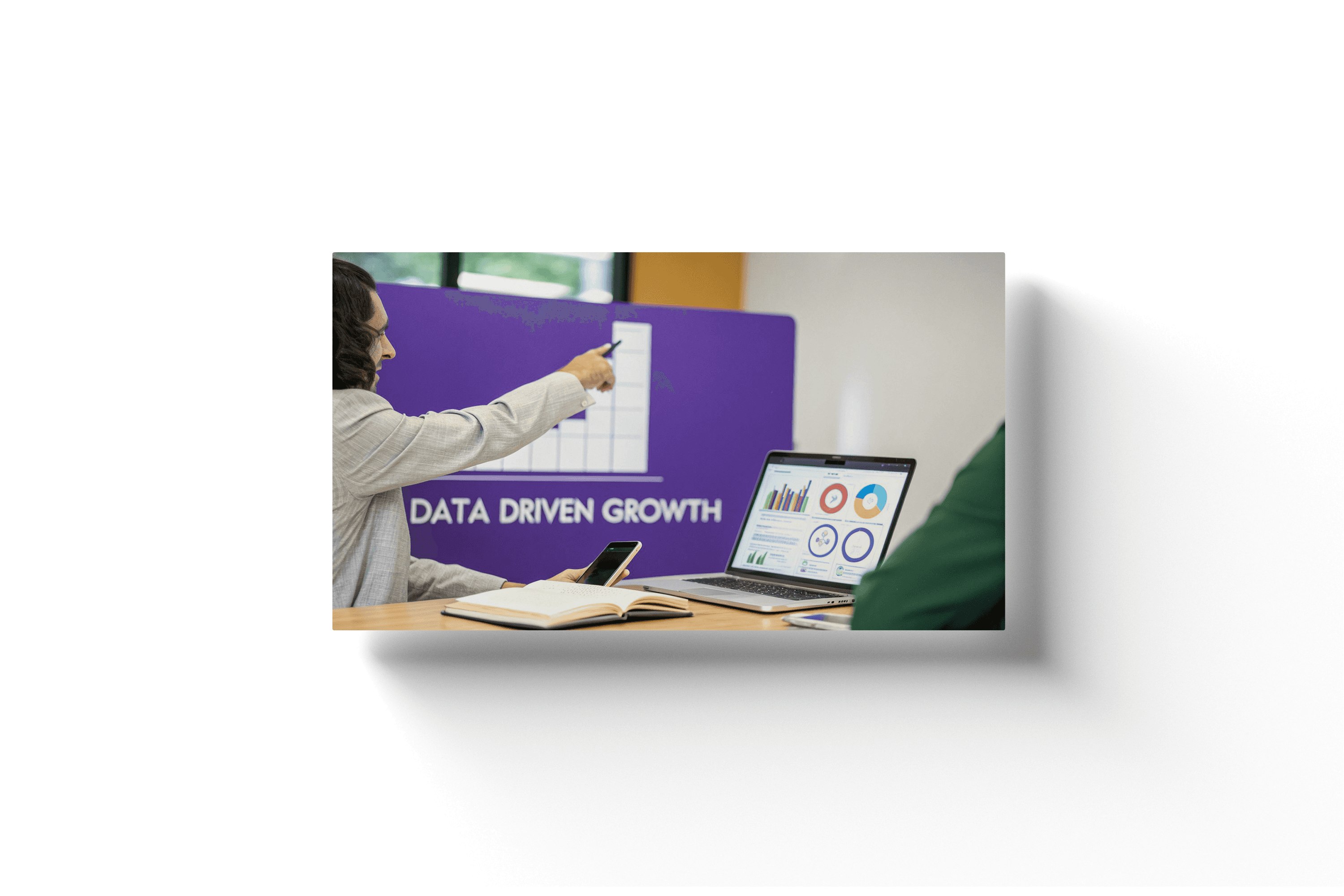
Investing in a digital marketing strategy can feel like throwing money into a black box. But it shouldn't be. A successful consulting partnership delivers tangible, measurable results—and it’s critical to look past superficial numbers like social media likes to see what's actually impacting your bottom line.
Proving the value of your investment isn't guesswork; it requires a clear framework for tracking the data that matters. This is how the engagement shifts from an expense to a strategic investment that clearly pays for itself. It gives you the hard data needed to confidently discuss what's working and where to press the advantage.
The process illustrated below shows the typical flow of a consulting project, from initial discovery to ongoing optimization. This cycle is the foundation for tracking your ROI effectively.
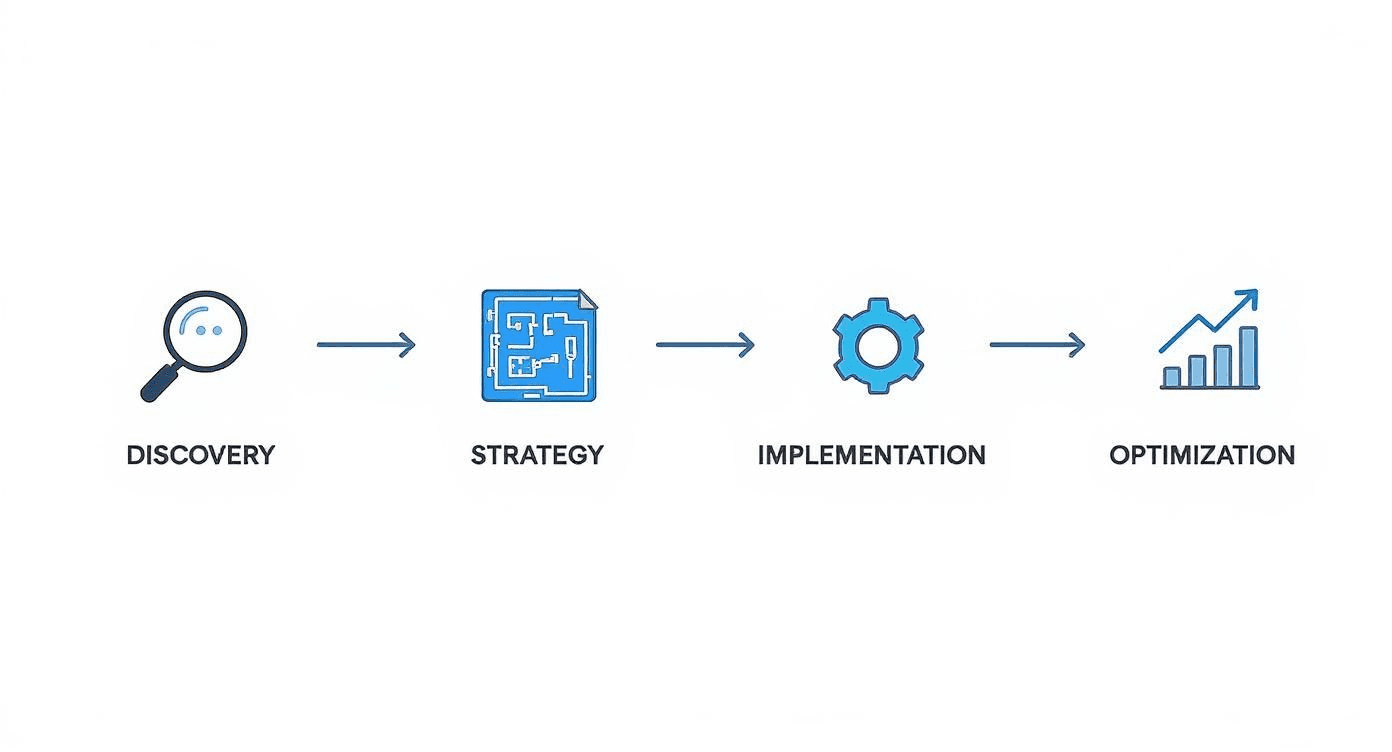
As you can see, measurement isn’t just a final step. It's built into a continuous loop of improvement that keeps your strategy sharp and effective.
Moving Beyond Vanity Metrics
The first, most important step in measuring ROI is to focus on the Key Performance Indicators (KPIs) directly tied to your business's health. Metrics like follower counts or page views might feel good, but they don't reveal much about real growth. A good consultant helps you cut through the noise.
They'll help you identify and track the KPIs that truly move the needle. Properly understanding and tracking the right digital marketing performance metrics is the only way to measure the true return on any consulting investment and prove you’re getting tangible growth.
Core KPIs for Proving Consulting Value
Here are three critical KPIs that paint a clear financial picture of your marketing’s impact. Any strategy from a consultant should be designed to move these numbers in the right direction.
Customer Acquisition Cost (CAC)
Your Customer Acquisition Cost is the total amount you spend on sales and marketing to acquire one new customer. A primary goal of any digital marketing strategy consulting engagement is to drive this number down.
For example, a consultant might refine your Google Ads targeting and optimize your landing page. As a result, your CAC drops from $250 to $175. That’s a 30% reduction, meaning you can acquire more customers for the same budget, directly boosting profitability.
Customer Lifetime Value (CLV)
Customer Lifetime Value is the total revenue you can expect from a single customer over their entire relationship with your business. A great strategy doesn't just bring in any customer; it brings in the right ones—those who stay longer and spend more.
A consultant might achieve this by creating a content strategy that attracts a more qualified audience or setting up an email marketing flow that boosts retention. Increasing CLV is a powerful way to build sustainable, long-term growth.
Return on Ad Spend (ROAS)
If you're running any paid advertising, Return on Ad Spend is the KPI that matters most. It measures the gross revenue generated for every dollar spent on ads.
If you spend $1,000 on a campaign that brings in $5,000 in sales, your ROAS is 5x. Simple. An expert consultant will optimize everything—from ad creative to audience targeting—to push this number as high as possible. This ensures your ad budget is a profit engine, not a cost center.
The ultimate test of a consultant's value is whether they can build a system where the gains from improving CAC, CLV, and ROAS massively outweigh their fees. When your marketing becomes a predictable source of profit, the ROI speaks for itself.
At Nextus, we build every strategy with these core metrics in mind. As a Brand Identity Agency that also specializes in Web Design in Naples FL, we ensure your brand's message and your website are perfectly synced to attract and convert high-value customers, making your ROI easy to see.
How to Hire the Right Marketing Consultant
Choosing a marketing partner is one of the most critical decisions for your business. This isn't just about outsourcing tasks; it’s about finding a strategic ally who understands your vision and has the expertise to bring it to life.
The right consultant becomes an extension of your team, providing the guidance needed to navigate the path to sustainable growth. A solid vetting process ensures you find someone who will challenge assumptions, uncover hidden opportunities, and build a marketing engine that delivers measurable results.
Taking the time to get this right from the start saves you from costly missteps and sets your business up for long-term success.
Your Consultant Vetting Checklist
Finding the perfect fit requires more than a gut feeling. You need to look past a slick sales pitch and dig into a consultant's track record, communication style, and strategic mindset.
A great consultant is obsessed with outcomes, not just deliverables. They should be able to draw a straight line from their work to your bottom line. Think of it like hiring a key executive—you wouldn't rush that decision. This checklist will help you systematically evaluate what to look for.
Consultant Vetting Checklist
When evaluating a potential marketing partner, it's easy to get sidetracked by impressive presentations. This checklist helps you stay focused on what actually matters: their ability to deliver real, tangible results for your business.
Evaluation Area | What to Look For | Potential Red Flags |
|---|---|---|
Proven Results | Specific case studies with measurable KPIs (e.g., "lowered CAC by 25%"). | Vague claims of success without any data or concrete examples. |
Strategic Focus | A clear emphasis on understanding your business goals before discussing tactics. | Immediately jumping to tactics like "we need to post more on TikTok." |
Communication | Transparent, proactive, and jargon-free communication style. | Evasive answers to tough questions or an overreliance on buzzwords. |
Industry Fit | Experience in your industry or with businesses facing similar challenges. | A "one-size-fits-all" approach that ignores your unique market. |
Using a simple framework like this helps you move beyond a gut feeling and make a data-informed decision. A true partner will welcome this level of scrutiny because they are confident in the value they provide.
Essential Questions to Ask Any Potential Consultant
Once you've narrowed your list, the interview is your chance to see how they think. Your questions should be designed to reveal how a consultant solves problems, handles adversity, and approaches a partnership. Generic questions get generic answers.
Here are a few essential questions to get the conversation rolling:
How do you define and measure success for a project like ours?
Their answer should go beyond surface-level metrics like clicks or impressions. You want to hear about business outcomes like revenue, lead quality, and customer lifetime value.
Describe a time a strategy didn't work as planned and how you pivoted.
This question is huge. It reveals their problem-solving skills, honesty, and agility. Every strategy needs adjustments, and you need a partner who is transparent when things don’t go perfectly to plan.
Walk me through your process for our initial 90 days together.
A confident consultant will have a clear, structured onboarding and discovery process. It shows they're organized and have a repeatable system for getting results.
Asking these types of questions helps you understand their strategic depth. To see what a fully fleshed-out strategy actually looks like, check out our in-depth marketing strategy plan sample.
Finding a Partner for Both Strategy and Execution
For many businesses, the real game-changer is finding a single partner who can both build the strategy and execute it. This eliminates the friction that occurs when a strategist hands a plan off to a separate implementation team. A cohesive approach ensures the original vision is carried through from start to finish.
For example, a business in Southwest Florida might seek an agency offering Web Design in Naples FL alongside high-level strategy. This integrated model is incredibly powerful. When your Brand Identity Agency is also the team building your website and running your SEO, every element is perfectly aligned from day one.
This unified approach is backed by data. High-growth marketing consulting firms, which often blend strategy with key digital services, grow much faster than their peers. A major reason is their mastery of digital lead generation, which accounts for around 40% of their total leads—far more than lower-growth firms. You can explore more of what drives their success in this detailed marketing consulting analysis.
At Nextus, we’ve built our entire agency around this blended model. We combine top-tier digital marketing strategy consulting with expert in-house execution. The result is a seamless, high-impact experience that drives real, measurable growth for our clients.
Your Top Marketing Consulting Questions, Answered
Deciding to bring in a digital marketing strategy consultant is a big move, and it's normal to have questions. You need to understand the logistics, costs, and what you're actually getting before you commit. Here are clear, straightforward answers to the most common questions we hear from business owners.
Getting clarity on these points means you can move forward with confidence, knowing exactly how a consultant can fit into your business and what to expect from the relationship.
How Much Does Digital Marketing Consulting Cost?
This is always the first question, and the honest answer is: it depends. The cost hinges on the scope of your project, the consultant's experience, and how you choose to work together.
You'll generally see a few different pricing models: hourly rates (often $150-$500+), project-based fees for a complete strategy (starting around $5,000), or monthly retainers for ongoing support (typically $2,500-$10,000+). The key is to see it as an investment, not an expense. A solid strategy that doubles your qualified leads or cuts your customer acquisition cost in half delivers a return that makes the initial cost look tiny. At Nextus, we build transparent proposals around your specific goals, so you see the clear value and ROI from day one.
What Is the Difference Between a Consultant and an Agency?
Here’s an easy way to think about it: a consultant is the architect who designs the strategic blueprint. They focus on high-level analysis, planning, and roadmapping. A traditional marketing agency is the builder who executes that plan—they run the ads, write the content, and manage social media.
A consultant gives you the "why" and the "what," while an agency usually handles the "how" and the "do." This separation ensures your strategy is built on objective data, not just the services an agency happens to sell.
However, some modern firms like Nextus blend these roles for a more seamless solution. As a Brand Identity Agency, we combine deep strategic consulting with expert in-house execution for services like Web Design in Naples FL. This closes the gap between planning and doing.
How Long Until We See Results?
The timeline for results is tied directly to the strategy. You can often see "quick wins" within 1-3 months from tactics like paid ad optimization, conversion rate tweaks on your website, or a well-timed email campaign. These actions are designed for more immediate impact.
On the other hand, foundational plays like SEO and organic content marketing are long-term investments. These efforts build sustainable, valuable assets for your business but usually take 6-12 months to deliver substantial, lasting results. A good consultant will set clear expectations with a roadmap that includes both short-term milestones and long-term goals.
Do We Need a Consultant If We Have an In-House Team?
Yes, and this is one of the most powerful ways to use a consultant. An outside expert brings a fresh perspective, free from internal biases that can cloud judgment. They also bring specialized knowledge that can significantly level up your in-house team.
A consultant can help your team master new skills, provide critical strategic direction for a major project like a rebrand, or introduce advanced techniques like AI automation with tools like n8n. They act as a strategic partner to boost your team's capabilities, not replace them. The end goal is to make your team more effective and self-sufficient, a process Nextus is well-equipped to guide.
Ready to stop guessing and start growing with a clear, data-driven plan? Nextus Digital Solutions combines expert digital marketing strategy consulting with flawless execution to build brands that stand out and websites that convert. Let's build your blueprint for success.
How to Measure the ROI of Your Consulting Investment
Investing in a digital marketing strategy can feel like throwing money into a black box. But it shouldn't be. A successful consulting partnership delivers tangible, measurable results—and it’s critical to look past superficial numbers like social media likes to see what's actually impacting your bottom line.
Proving the value of your investment isn't guesswork; it requires a clear framework for tracking the data that matters. This is how the engagement shifts from an expense to a strategic investment that clearly pays for itself. It gives you the hard data needed to confidently discuss what's working and where to press the advantage.
The process illustrated below shows the typical flow of a consulting project, from initial discovery to ongoing optimization. This cycle is the foundation for tracking your ROI effectively.
As you can see, measurement isn’t just a final step. It's built into a continuous loop of improvement that keeps your strategy sharp and effective.
Moving Beyond Vanity Metrics
The first, most important step in measuring ROI is to focus on the Key Performance Indicators (KPIs) directly tied to your business's health. Metrics like follower counts or page views might feel good, but they don't reveal much about real growth. A good consultant helps you cut through the noise.
They'll help you identify and track the KPIs that truly move the needle. Properly understanding and tracking the right digital marketing performance metrics is the only way to measure the true return on any consulting investment and prove you’re getting tangible growth.
Core KPIs for Proving Consulting Value
Here are three critical KPIs that paint a clear financial picture of your marketing’s impact. Any strategy from a consultant should be designed to move these numbers in the right direction.
Customer Acquisition Cost (CAC)
Your Customer Acquisition Cost is the total amount you spend on sales and marketing to acquire one new customer. A primary goal of any digital marketing strategy consulting engagement is to drive this number down.
For example, a consultant might refine your Google Ads targeting and optimize your landing page. As a result, your CAC drops from $250 to $175. That’s a 30% reduction, meaning you can acquire more customers for the same budget, directly boosting profitability.
Customer Lifetime Value (CLV)
Customer Lifetime Value is the total revenue you can expect from a single customer over their entire relationship with your business. A great strategy doesn't just bring in any customer; it brings in the right ones—those who stay longer and spend more.
A consultant might achieve this by creating a content strategy that attracts a more qualified audience or setting up an email marketing flow that boosts retention. Increasing CLV is a powerful way to build sustainable, long-term growth.
Return on Ad Spend (ROAS)
If you're running any paid advertising, Return on Ad Spend is the KPI that matters most. It measures the gross revenue generated for every dollar spent on ads.
If you spend $1,000 on a campaign that brings in $5,000 in sales, your ROAS is 5x. Simple. An expert consultant will optimize everything—from ad creative to audience targeting—to push this number as high as possible. This ensures your ad budget is a profit engine, not a cost center.
The ultimate test of a consultant's value is whether they can build a system where the gains from improving CAC, CLV, and ROAS massively outweigh their fees. When your marketing becomes a predictable source of profit, the ROI speaks for itself.
At Nextus, we build every strategy with these core metrics in mind. As a Brand Identity Agency that also specializes in Web Design in Naples FL, we ensure your brand's message and your website are perfectly synced to attract and convert high-value customers, making your ROI easy to see.
How to Hire the Right Marketing Consultant
Choosing a marketing partner is one of the most critical decisions for your business. This isn't just about outsourcing tasks; it’s about finding a strategic ally who understands your vision and has the expertise to bring it to life.
The right consultant becomes an extension of your team, providing the guidance needed to navigate the path to sustainable growth. A solid vetting process ensures you find someone who will challenge assumptions, uncover hidden opportunities, and build a marketing engine that delivers measurable results.
Taking the time to get this right from the start saves you from costly missteps and sets your business up for long-term success.
Your Consultant Vetting Checklist
Finding the perfect fit requires more than a gut feeling. You need to look past a slick sales pitch and dig into a consultant's track record, communication style, and strategic mindset.
A great consultant is obsessed with outcomes, not just deliverables. They should be able to draw a straight line from their work to your bottom line. Think of it like hiring a key executive—you wouldn't rush that decision. This checklist will help you systematically evaluate what to look for.
Consultant Vetting Checklist
When evaluating a potential marketing partner, it's easy to get sidetracked by impressive presentations. This checklist helps you stay focused on what actually matters: their ability to deliver real, tangible results for your business.
Evaluation Area | What to Look For | Potential Red Flags |
|---|---|---|
Proven Results | Specific case studies with measurable KPIs (e.g., "lowered CAC by 25%"). | Vague claims of success without any data or concrete examples. |
Strategic Focus | A clear emphasis on understanding your business goals before discussing tactics. | Immediately jumping to tactics like "we need to post more on TikTok." |
Communication | Transparent, proactive, and jargon-free communication style. | Evasive answers to tough questions or an overreliance on buzzwords. |
Industry Fit | Experience in your industry or with businesses facing similar challenges. | A "one-size-fits-all" approach that ignores your unique market. |
Using a simple framework like this helps you move beyond a gut feeling and make a data-informed decision. A true partner will welcome this level of scrutiny because they are confident in the value they provide.
Essential Questions to Ask Any Potential Consultant
Once you've narrowed your list, the interview is your chance to see how they think. Your questions should be designed to reveal how a consultant solves problems, handles adversity, and approaches a partnership. Generic questions get generic answers.
Here are a few essential questions to get the conversation rolling:
How do you define and measure success for a project like ours?
Their answer should go beyond surface-level metrics like clicks or impressions. You want to hear about business outcomes like revenue, lead quality, and customer lifetime value.
Describe a time a strategy didn't work as planned and how you pivoted.
This question is huge. It reveals their problem-solving skills, honesty, and agility. Every strategy needs adjustments, and you need a partner who is transparent when things don’t go perfectly to plan.
Walk me through your process for our initial 90 days together.
A confident consultant will have a clear, structured onboarding and discovery process. It shows they're organized and have a repeatable system for getting results.
Asking these types of questions helps you understand their strategic depth. To see what a fully fleshed-out strategy actually looks like, check out our in-depth marketing strategy plan sample.
Finding a Partner for Both Strategy and Execution
For many businesses, the real game-changer is finding a single partner who can both build the strategy and execute it. This eliminates the friction that occurs when a strategist hands a plan off to a separate implementation team. A cohesive approach ensures the original vision is carried through from start to finish.
For example, a business in Southwest Florida might seek an agency offering Web Design in Naples FL alongside high-level strategy. This integrated model is incredibly powerful. When your Brand Identity Agency is also the team building your website and running your SEO, every element is perfectly aligned from day one.
This unified approach is backed by data. High-growth marketing consulting firms, which often blend strategy with key digital services, grow much faster than their peers. A major reason is their mastery of digital lead generation, which accounts for around 40% of their total leads—far more than lower-growth firms. You can explore more of what drives their success in this detailed marketing consulting analysis.
At Nextus, we’ve built our entire agency around this blended model. We combine top-tier digital marketing strategy consulting with expert in-house execution. The result is a seamless, high-impact experience that drives real, measurable growth for our clients.
Your Top Marketing Consulting Questions, Answered
Deciding to bring in a digital marketing strategy consultant is a big move, and it's normal to have questions. You need to understand the logistics, costs, and what you're actually getting before you commit. Here are clear, straightforward answers to the most common questions we hear from business owners.
Getting clarity on these points means you can move forward with confidence, knowing exactly how a consultant can fit into your business and what to expect from the relationship.
How Much Does Digital Marketing Consulting Cost?
This is always the first question, and the honest answer is: it depends. The cost hinges on the scope of your project, the consultant's experience, and how you choose to work together.
You'll generally see a few different pricing models: hourly rates (often $150-$500+), project-based fees for a complete strategy (starting around $5,000), or monthly retainers for ongoing support (typically $2,500-$10,000+). The key is to see it as an investment, not an expense. A solid strategy that doubles your qualified leads or cuts your customer acquisition cost in half delivers a return that makes the initial cost look tiny. At Nextus, we build transparent proposals around your specific goals, so you see the clear value and ROI from day one.
What Is the Difference Between a Consultant and an Agency?
Here’s an easy way to think about it: a consultant is the architect who designs the strategic blueprint. They focus on high-level analysis, planning, and roadmapping. A traditional marketing agency is the builder who executes that plan—they run the ads, write the content, and manage social media.
A consultant gives you the "why" and the "what," while an agency usually handles the "how" and the "do." This separation ensures your strategy is built on objective data, not just the services an agency happens to sell.
However, some modern firms like Nextus blend these roles for a more seamless solution. As a Brand Identity Agency, we combine deep strategic consulting with expert in-house execution for services like Web Design in Naples FL. This closes the gap between planning and doing.
How Long Until We See Results?
The timeline for results is tied directly to the strategy. You can often see "quick wins" within 1-3 months from tactics like paid ad optimization, conversion rate tweaks on your website, or a well-timed email campaign. These actions are designed for more immediate impact.
On the other hand, foundational plays like SEO and organic content marketing are long-term investments. These efforts build sustainable, valuable assets for your business but usually take 6-12 months to deliver substantial, lasting results. A good consultant will set clear expectations with a roadmap that includes both short-term milestones and long-term goals.
Do We Need a Consultant If We Have an In-House Team?
Yes, and this is one of the most powerful ways to use a consultant. An outside expert brings a fresh perspective, free from internal biases that can cloud judgment. They also bring specialized knowledge that can significantly level up your in-house team.
A consultant can help your team master new skills, provide critical strategic direction for a major project like a rebrand, or introduce advanced techniques like AI automation with tools like n8n. They act as a strategic partner to boost your team's capabilities, not replace them. The end goal is to make your team more effective and self-sufficient, a process Nextus is well-equipped to guide.
Ready to stop guessing and start growing with a clear, data-driven plan? Nextus Digital Solutions combines expert digital marketing strategy consulting with flawless execution to build brands that stand out and websites that convert. Let's build your blueprint for success.
How to Measure the ROI of Your Consulting Investment
Investing in a digital marketing strategy can feel like throwing money into a black box. But it shouldn't be. A successful consulting partnership delivers tangible, measurable results—and it’s critical to look past superficial numbers like social media likes to see what's actually impacting your bottom line.
Proving the value of your investment isn't guesswork; it requires a clear framework for tracking the data that matters. This is how the engagement shifts from an expense to a strategic investment that clearly pays for itself. It gives you the hard data needed to confidently discuss what's working and where to press the advantage.
The process illustrated below shows the typical flow of a consulting project, from initial discovery to ongoing optimization. This cycle is the foundation for tracking your ROI effectively.
As you can see, measurement isn’t just a final step. It's built into a continuous loop of improvement that keeps your strategy sharp and effective.
Moving Beyond Vanity Metrics
The first, most important step in measuring ROI is to focus on the Key Performance Indicators (KPIs) directly tied to your business's health. Metrics like follower counts or page views might feel good, but they don't reveal much about real growth. A good consultant helps you cut through the noise.
They'll help you identify and track the KPIs that truly move the needle. Properly understanding and tracking the right digital marketing performance metrics is the only way to measure the true return on any consulting investment and prove you’re getting tangible growth.
Core KPIs for Proving Consulting Value
Here are three critical KPIs that paint a clear financial picture of your marketing’s impact. Any strategy from a consultant should be designed to move these numbers in the right direction.
Customer Acquisition Cost (CAC)
Your Customer Acquisition Cost is the total amount you spend on sales and marketing to acquire one new customer. A primary goal of any digital marketing strategy consulting engagement is to drive this number down.
For example, a consultant might refine your Google Ads targeting and optimize your landing page. As a result, your CAC drops from $250 to $175. That’s a 30% reduction, meaning you can acquire more customers for the same budget, directly boosting profitability.
Customer Lifetime Value (CLV)
Customer Lifetime Value is the total revenue you can expect from a single customer over their entire relationship with your business. A great strategy doesn't just bring in any customer; it brings in the right ones—those who stay longer and spend more.
A consultant might achieve this by creating a content strategy that attracts a more qualified audience or setting up an email marketing flow that boosts retention. Increasing CLV is a powerful way to build sustainable, long-term growth.
Return on Ad Spend (ROAS)
If you're running any paid advertising, Return on Ad Spend is the KPI that matters most. It measures the gross revenue generated for every dollar spent on ads.
If you spend $1,000 on a campaign that brings in $5,000 in sales, your ROAS is 5x. Simple. An expert consultant will optimize everything—from ad creative to audience targeting—to push this number as high as possible. This ensures your ad budget is a profit engine, not a cost center.
The ultimate test of a consultant's value is whether they can build a system where the gains from improving CAC, CLV, and ROAS massively outweigh their fees. When your marketing becomes a predictable source of profit, the ROI speaks for itself.
At Nextus, we build every strategy with these core metrics in mind. As a Brand Identity Agency that also specializes in Web Design in Naples FL, we ensure your brand's message and your website are perfectly synced to attract and convert high-value customers, making your ROI easy to see.
How to Hire the Right Marketing Consultant
Choosing a marketing partner is one of the most critical decisions for your business. This isn't just about outsourcing tasks; it’s about finding a strategic ally who understands your vision and has the expertise to bring it to life.
The right consultant becomes an extension of your team, providing the guidance needed to navigate the path to sustainable growth. A solid vetting process ensures you find someone who will challenge assumptions, uncover hidden opportunities, and build a marketing engine that delivers measurable results.
Taking the time to get this right from the start saves you from costly missteps and sets your business up for long-term success.
Your Consultant Vetting Checklist
Finding the perfect fit requires more than a gut feeling. You need to look past a slick sales pitch and dig into a consultant's track record, communication style, and strategic mindset.
A great consultant is obsessed with outcomes, not just deliverables. They should be able to draw a straight line from their work to your bottom line. Think of it like hiring a key executive—you wouldn't rush that decision. This checklist will help you systematically evaluate what to look for.
Consultant Vetting Checklist
When evaluating a potential marketing partner, it's easy to get sidetracked by impressive presentations. This checklist helps you stay focused on what actually matters: their ability to deliver real, tangible results for your business.
Evaluation Area | What to Look For | Potential Red Flags |
|---|---|---|
Proven Results | Specific case studies with measurable KPIs (e.g., "lowered CAC by 25%"). | Vague claims of success without any data or concrete examples. |
Strategic Focus | A clear emphasis on understanding your business goals before discussing tactics. | Immediately jumping to tactics like "we need to post more on TikTok." |
Communication | Transparent, proactive, and jargon-free communication style. | Evasive answers to tough questions or an overreliance on buzzwords. |
Industry Fit | Experience in your industry or with businesses facing similar challenges. | A "one-size-fits-all" approach that ignores your unique market. |
Using a simple framework like this helps you move beyond a gut feeling and make a data-informed decision. A true partner will welcome this level of scrutiny because they are confident in the value they provide.
Essential Questions to Ask Any Potential Consultant
Once you've narrowed your list, the interview is your chance to see how they think. Your questions should be designed to reveal how a consultant solves problems, handles adversity, and approaches a partnership. Generic questions get generic answers.
Here are a few essential questions to get the conversation rolling:
How do you define and measure success for a project like ours?
Their answer should go beyond surface-level metrics like clicks or impressions. You want to hear about business outcomes like revenue, lead quality, and customer lifetime value.
Describe a time a strategy didn't work as planned and how you pivoted.
This question is huge. It reveals their problem-solving skills, honesty, and agility. Every strategy needs adjustments, and you need a partner who is transparent when things don’t go perfectly to plan.
Walk me through your process for our initial 90 days together.
A confident consultant will have a clear, structured onboarding and discovery process. It shows they're organized and have a repeatable system for getting results.
Asking these types of questions helps you understand their strategic depth. To see what a fully fleshed-out strategy actually looks like, check out our in-depth marketing strategy plan sample.
Finding a Partner for Both Strategy and Execution
For many businesses, the real game-changer is finding a single partner who can both build the strategy and execute it. This eliminates the friction that occurs when a strategist hands a plan off to a separate implementation team. A cohesive approach ensures the original vision is carried through from start to finish.
For example, a business in Southwest Florida might seek an agency offering Web Design in Naples FL alongside high-level strategy. This integrated model is incredibly powerful. When your Brand Identity Agency is also the team building your website and running your SEO, every element is perfectly aligned from day one.
This unified approach is backed by data. High-growth marketing consulting firms, which often blend strategy with key digital services, grow much faster than their peers. A major reason is their mastery of digital lead generation, which accounts for around 40% of their total leads—far more than lower-growth firms. You can explore more of what drives their success in this detailed marketing consulting analysis.
At Nextus, we’ve built our entire agency around this blended model. We combine top-tier digital marketing strategy consulting with expert in-house execution. The result is a seamless, high-impact experience that drives real, measurable growth for our clients.
Your Top Marketing Consulting Questions, Answered
Deciding to bring in a digital marketing strategy consultant is a big move, and it's normal to have questions. You need to understand the logistics, costs, and what you're actually getting before you commit. Here are clear, straightforward answers to the most common questions we hear from business owners.
Getting clarity on these points means you can move forward with confidence, knowing exactly how a consultant can fit into your business and what to expect from the relationship.
How Much Does Digital Marketing Consulting Cost?
This is always the first question, and the honest answer is: it depends. The cost hinges on the scope of your project, the consultant's experience, and how you choose to work together.
You'll generally see a few different pricing models: hourly rates (often $150-$500+), project-based fees for a complete strategy (starting around $5,000), or monthly retainers for ongoing support (typically $2,500-$10,000+). The key is to see it as an investment, not an expense. A solid strategy that doubles your qualified leads or cuts your customer acquisition cost in half delivers a return that makes the initial cost look tiny. At Nextus, we build transparent proposals around your specific goals, so you see the clear value and ROI from day one.
What Is the Difference Between a Consultant and an Agency?
Here’s an easy way to think about it: a consultant is the architect who designs the strategic blueprint. They focus on high-level analysis, planning, and roadmapping. A traditional marketing agency is the builder who executes that plan—they run the ads, write the content, and manage social media.
A consultant gives you the "why" and the "what," while an agency usually handles the "how" and the "do." This separation ensures your strategy is built on objective data, not just the services an agency happens to sell.
However, some modern firms like Nextus blend these roles for a more seamless solution. As a Brand Identity Agency, we combine deep strategic consulting with expert in-house execution for services like Web Design in Naples FL. This closes the gap between planning and doing.
How Long Until We See Results?
The timeline for results is tied directly to the strategy. You can often see "quick wins" within 1-3 months from tactics like paid ad optimization, conversion rate tweaks on your website, or a well-timed email campaign. These actions are designed for more immediate impact.
On the other hand, foundational plays like SEO and organic content marketing are long-term investments. These efforts build sustainable, valuable assets for your business but usually take 6-12 months to deliver substantial, lasting results. A good consultant will set clear expectations with a roadmap that includes both short-term milestones and long-term goals.
Do We Need a Consultant If We Have an In-House Team?
Yes, and this is one of the most powerful ways to use a consultant. An outside expert brings a fresh perspective, free from internal biases that can cloud judgment. They also bring specialized knowledge that can significantly level up your in-house team.
A consultant can help your team master new skills, provide critical strategic direction for a major project like a rebrand, or introduce advanced techniques like AI automation with tools like n8n. They act as a strategic partner to boost your team's capabilities, not replace them. The end goal is to make your team more effective and self-sufficient, a process Nextus is well-equipped to guide.
Ready to stop guessing and start growing with a clear, data-driven plan? Nextus Digital Solutions combines expert digital marketing strategy consulting with flawless execution to build brands that stand out and websites that convert. Let's build your blueprint for success.


2025
What Is Search Engine Optimization? A Practical Guide to Boosting Your Website Traffic
2025
What Is Search Engine Optimization? A Practical Guide to Boosting Your Website Traffic
2025
What Is Search Engine Optimization? A Practical Guide to Boosting Your Website Traffic
2025
A Practical Guide to Digital Marketing for Local Businesses
2025
A Practical Guide to Digital Marketing for Local Businesses
2025
A Practical Guide to Digital Marketing for Local Businesses
Frequently
Frequently
Asked Questions
Questions
Asked QuestionS
What services do you offer as a branding agency?
What industries do you specialize in?
How Does Pricing Work?
Can you provide examples of your previous work?
How do you approach Client branding projects?
What's the best way to learn more or work together?
What services do you offer as a branding agency?
What industries do you specialize in?
How Does Pricing Work?
Can you provide examples of your previous work?
How do you approach Client branding projects?
What's the best way to learn more or work together?
What services do you offer as a branding agency?
What industries do you specialize in?
How Does Pricing Work?
Can you provide examples of your previous work?
How do you approach Client branding projects?
What's the best way to learn more or work together?
FREE AUDIT?