
📢 CONTACT US FOR A FREE AUDIT, CONSULTATION, OR BRAND ANALYSIS. WE WANT TO HELP HOWEVER WE CAN 🏁 BUILD YOUR BRAND, SELL THE WOW FACTOR, AND LET US DO THE THINKING AHEAD 🧠
📢 CONTACT US FOR A FREE AUDIT, CONSULTATION, OR BRAND ANALYSIS. WE WANT TO HELP HOWEVER WE CAN 🏁 BUILD YOUR BRAND, SELL THE WOW FACTOR, AND LET US DO THE THINKING AHEAD 🧠
📢 CONTACT US FOR A FREE AUDIT, CONSULTATION, OR BRAND ANALYSIS. WE WANT TO HELP HOWEVER WE CAN 🏁 BUILD YOUR BRAND, SELL THE WOW FACTOR, AND LET US DO THE THINKING AHEAD 🧠
Paid vs Organic Search: A Guide to Winning Online
Paid vs Organic Search: A Guide to Winning Online
SEO
Marketing
Guide
Comparison

Deciding between paid and organic search comes down to a simple question: are you paying for placement, or are you earning it? Paid search is like running a billboard on a digital highway. You pay to get your ad in front of people, right at the top of the search results, and you see traffic almost instantly. On the other hand, organic search is more like building a flagship store in the heart of downtown. It takes time, effort, and a solid foundation, but once established, it brings in customers naturally and builds real, lasting brand value.
This choice hinges on your immediate needs versus your long-term vision. Do you need controllable traffic right now, or are you focused on sustainable, compounding growth? This guide provides the actionable insights you need to make the right call.
Understanding The Core Differences
Paid search, often called Pay-Per-Click (PPC), is a straightforward advertising model. You pay a fee each time someone clicks on your ad, which appears in a "sponsored" section of the search results. Think of it as renting a prime spot at the very top of Google’s results page. The key advantage here is the speed and precision—you can start targeting specific keywords, locations, and customer profiles today and see visitors arrive tomorrow.
Organic search is the long game. It’s about convincing search engines like Google that your website is the most authoritative and relevant answer to a user's query. This is achieved through Search Engine Optimization (SEO), a discipline that involves creating high-quality content, ensuring your site is technically sound, and building its credibility across the web. The results don't appear overnight, but the traffic you earn is often more stable and builds significant brand authority over time.
Quick Comparison Paid vs Organic Search
To make the trade-offs clearer, here’s a quick look at how the two channels stack up against each other.
Attribute | Paid Search (PPC) | Organic Search (SEO) |
|---|---|---|
Speed to Results | Immediate (hours to days) | Slow (can take 3-12 months) |
Cost Model | Pay-per-click (direct, ongoing cost) | Indirect (content, tools, expertise) |
Longevity | Traffic stops the moment you stop paying | Compounding, long-term results |
Audience Trust | Lower (people know it's an ad) | Higher (seen as more credible) |
Placement | Top or bottom of SERPs (Sponsored) | Below paid ads in main results |
This table provides a high-level overview. Paid is fast and direct, while organic is a slower, foundational investment that pays off down the road.
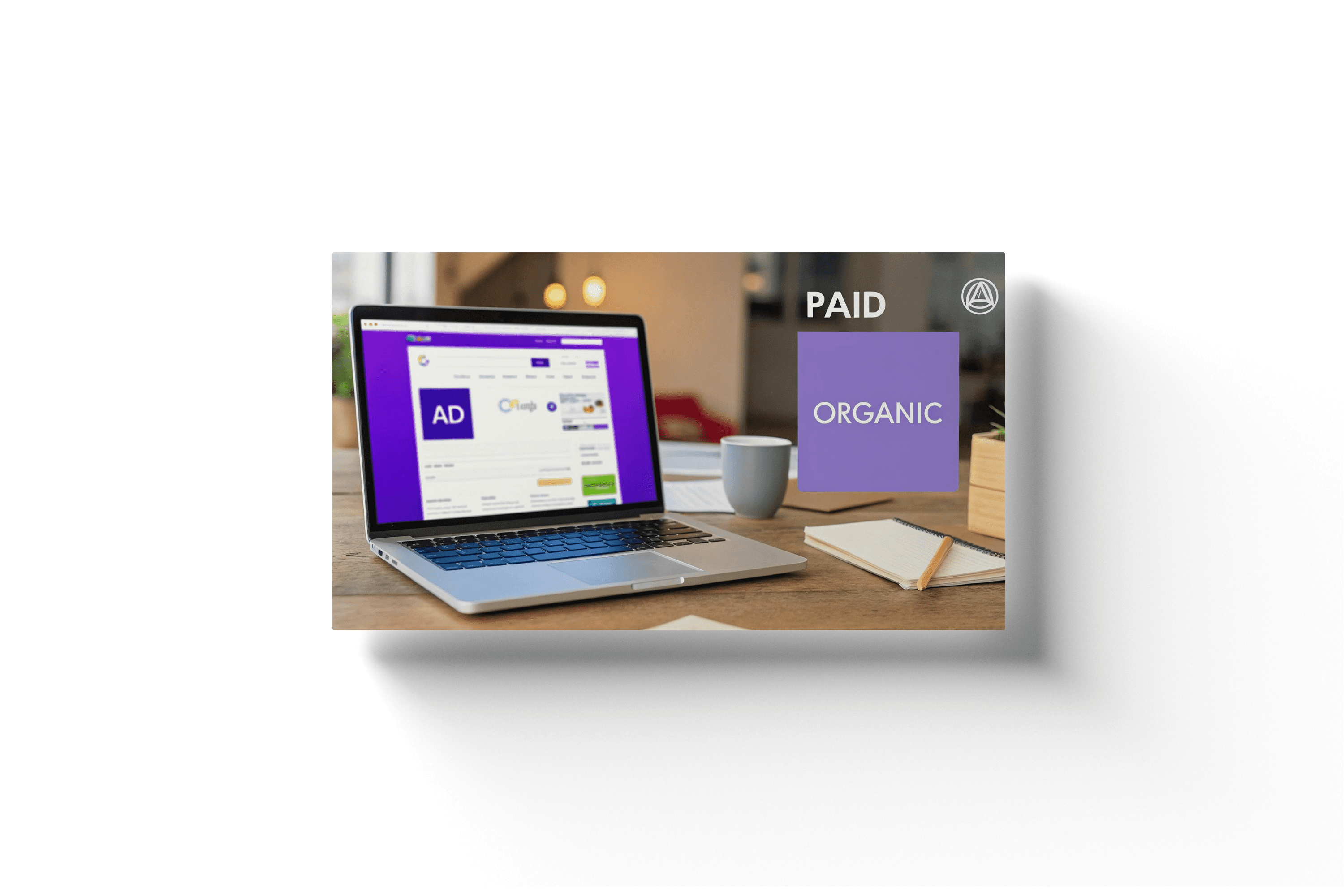
Below is a real-world example of a search engine results page (SERP). You can see exactly how paid and organic listings are presented to users.
That small "Sponsored" tag is what separates the ads from the organic results. It's a subtle label, but it significantly impacts how users perceive the link—many people instinctively trust the earned organic spots more.
The Power of Organic Traffic
While paid ads offer a quick boost, it's impossible to ignore the dominance of organic results. Organic search is responsible for approximately 53% of all trackable website traffic. To put that into perspective, paid search only accounts for about 15%. This massive difference shows why building a strong organic presence is essential for any small business serious about sustainable growth.
If you're looking to build that lasting presence, a good starting point is learning how to increase website traffic organically. Ultimately, mastering organic growth is a foundational business activity. At Nextus, we specialize in helping businesses build that digital foundation so they can tap into this incredibly valuable stream of traffic.
Analyzing Your Investment and Timeline for Results
Let’s move past the definitions. The real-world tug-of-war between paid and organic search almost always boils down to two things: money and time. Understanding how each channel uses these resources is the first step in building a marketing strategy that actually works for your small business.
Paid and organic search are fundamentally different, operating on completely separate models for cost and results. Choosing the right path depends on your immediate needs versus your long-term vision.
With paid search, you’re dealing with a direct, transactional expense. The most common setup is Pay-Per-Click (PPC), where you bid on keywords and pay a search engine every time someone clicks your ad. Your investment is your ad spend—the budget you feed the machine. It’s immediate and predictable; you set a budget, and the platform gets to work spending it to drive traffic your way.
Organic search, on the other hand, is an investment in building digital assets. Instead of paying for clicks, you invest resources into creating high-quality content, sorting out your website’s technical health, and building its authority. These aren't direct payments to Google, but they are very real costs in time, expertise, and resources—whether that means hiring an SEO specialist, a content writer, or paying for the right software.
The Immediate Impact of Paid Advertising
The single biggest advantage of paid search is its raw speed. As soon as you set up and fund a campaign, your ads can show up at the top of search results within hours. This makes it an incredibly potent tool for any business that needs to see results now.
Picture an e-commerce store launching a new product. They can't afford to wait months for organic rankings to kick in. By firing up a targeted Google Ads campaign, they can push potential buyers to their product pages on day one, generating sales and getting crucial market feedback almost instantly.
Paid search gives you speed and a control dial. You can turn the traffic tap on or off whenever you need, making it perfect for seasonal promotions, product launches, or reacting on the fly to market shifts.
This level of control is a game-changer for time-sensitive pushes. A local plumber, for example, could crank up their ads during a sudden cold snap when demand for burst pipe repairs skyrockets. Once the weather warms up, they can pause the campaign, ensuring their budget is only spent when it’s most likely to pay off.
The Compounding Value of Organic Growth
In sharp contrast, organic search is a long-haul game that demands patience. It's incredibly rare to see a huge impact from an SEO strategy in the first few months. You’re typically looking at 6 to 12 months of consistent work before you start to see meaningful, sustainable traffic that generates leads.
That timeline can be a tough pill to swallow for a new business needing immediate cash flow.
But the payoff for that patience is immense, because the value compounds over time. Think of it like planting a tree. It takes upfront effort and consistent care, but once mature, it provides value year after year with minimal ongoing work. A well-ranking blog post can keep attracting qualified visitors for years, bringing in leads long after the initial investment.
For instance, a consulting firm might publish an in-depth guide on a complex industry problem. It might take a full year to hit the first page of Google, but once there, it cements the firm as a genuine authority. That single piece of content can become a perpetual lead-generation machine, building brand trust and attracting high-quality clients without any ongoing ad spend. This is the core of building a strong digital brand—and a central part of the lasting value we focus on creating for our clients at Nextus. The paid vs organic search debate truly comes down to this trade-off between instant returns and building enduring digital assets.
Comparing Audience Trust and Conversion Performance
When we discuss paid vs. organic search, it’s not just about speed or budget; it’s about how your audience perceives you. The space on the screen between a sponsored ad and an organic result might be a few pixels, but the gap in audience trust can be a mile wide. This difference has a real, measurable impact on everything from who clicks to who buys.
Think about your own search habits. We’ve all become adept at subconsciously filtering out ads, a phenomenon known as 'ad blindness,' where our eyes skip right over sponsored listings. We jump straight to the organic results because we see them as more authentic—an endorsement from the search engine, not a paid placement. This isn’t just a hunch; user behavior backs it up. The trust people place in organic results means they're already more engaged before they even click your link.
The Credibility Gap and Click-Through Rates
It's no secret that organic search results almost always pull in higher click-through rates (CTR) than their paid counterparts. But why? Simply put, users know a top organic ranking must be earned. It's the result of building authority, publishing quality content, and proving relevance over time. You can't just buy that spot.
This earned authority gives organic results a powerful psychological edge. When someone sees your site ranking organically, they see it as a stamp of approval from Google. Paid ads, on the other hand, are seen for what they are—an advertisement.
An organic listing feels like an expert recommendation, while a paid ad feels like a sales pitch. This difference in perception is huge. At Nextus, our SEO strategies focus on building that long-term authority, creating a competitive advantage that money can't easily buy.
This trust gap is why organic search typically delivers better conversion rates. Industry reports show organic search conversion rates hover around 6.96%, whereas paid search is closer to 3.75%. To drive the point home, the top organic result on Google gets, on average, 19 times more clicks than the top paid result.
Analyzing Traffic Quality and Intent
While organic often wins on trust, the real question is about the quality of traffic each channel brings. Which one is "better" depends on your immediate goal and where the user is in their buying journey.
Visitors from organic search are often in research mode. They tend to stick around longer, view more pages, and have lower bounce rates because they’re there to learn and explore. They're building a relationship with your brand, not just looking for a quick transaction.
On the flip side, paid traffic is incredibly effective for zeroing in on users with high commercial intent—people at the bottom of the sales funnel who are ready to buy. A well-written ad can capture someone searching for "emergency plumber near me" and drive an immediate phone call. Of course, the landing page is everything here; a bad one will just burn through your ad spend. To ensure your paid traffic converts, review our guide on landing page design best practices.
Ultimately, you need both. You can explore broader content monetization strategies to see how clicks turn into revenue. A smart approach uses organic search to build the brand and educate the audience, while paid search excels at capturing that audience the moment they’re ready to act.
Deciding between paid and organic search comes down to a simple question: are you paying for placement, or are you earning it? Paid search is like running a billboard on a digital highway. You pay to get your ad in front of people, right at the top of the search results, and you see traffic almost instantly. On the other hand, organic search is more like building a flagship store in the heart of downtown. It takes time, effort, and a solid foundation, but once established, it brings in customers naturally and builds real, lasting brand value.
This choice hinges on your immediate needs versus your long-term vision. Do you need controllable traffic right now, or are you focused on sustainable, compounding growth? This guide provides the actionable insights you need to make the right call.
Understanding The Core Differences
Paid search, often called Pay-Per-Click (PPC), is a straightforward advertising model. You pay a fee each time someone clicks on your ad, which appears in a "sponsored" section of the search results. Think of it as renting a prime spot at the very top of Google’s results page. The key advantage here is the speed and precision—you can start targeting specific keywords, locations, and customer profiles today and see visitors arrive tomorrow.
Organic search is the long game. It’s about convincing search engines like Google that your website is the most authoritative and relevant answer to a user's query. This is achieved through Search Engine Optimization (SEO), a discipline that involves creating high-quality content, ensuring your site is technically sound, and building its credibility across the web. The results don't appear overnight, but the traffic you earn is often more stable and builds significant brand authority over time.
Quick Comparison Paid vs Organic Search
To make the trade-offs clearer, here’s a quick look at how the two channels stack up against each other.
Attribute | Paid Search (PPC) | Organic Search (SEO) |
|---|---|---|
Speed to Results | Immediate (hours to days) | Slow (can take 3-12 months) |
Cost Model | Pay-per-click (direct, ongoing cost) | Indirect (content, tools, expertise) |
Longevity | Traffic stops the moment you stop paying | Compounding, long-term results |
Audience Trust | Lower (people know it's an ad) | Higher (seen as more credible) |
Placement | Top or bottom of SERPs (Sponsored) | Below paid ads in main results |
This table provides a high-level overview. Paid is fast and direct, while organic is a slower, foundational investment that pays off down the road.
Below is a real-world example of a search engine results page (SERP). You can see exactly how paid and organic listings are presented to users.
That small "Sponsored" tag is what separates the ads from the organic results. It's a subtle label, but it significantly impacts how users perceive the link—many people instinctively trust the earned organic spots more.
The Power of Organic Traffic
While paid ads offer a quick boost, it's impossible to ignore the dominance of organic results. Organic search is responsible for approximately 53% of all trackable website traffic. To put that into perspective, paid search only accounts for about 15%. This massive difference shows why building a strong organic presence is essential for any small business serious about sustainable growth.
If you're looking to build that lasting presence, a good starting point is learning how to increase website traffic organically. Ultimately, mastering organic growth is a foundational business activity. At Nextus, we specialize in helping businesses build that digital foundation so they can tap into this incredibly valuable stream of traffic.
Analyzing Your Investment and Timeline for Results
Let’s move past the definitions. The real-world tug-of-war between paid and organic search almost always boils down to two things: money and time. Understanding how each channel uses these resources is the first step in building a marketing strategy that actually works for your small business.
Paid and organic search are fundamentally different, operating on completely separate models for cost and results. Choosing the right path depends on your immediate needs versus your long-term vision.
With paid search, you’re dealing with a direct, transactional expense. The most common setup is Pay-Per-Click (PPC), where you bid on keywords and pay a search engine every time someone clicks your ad. Your investment is your ad spend—the budget you feed the machine. It’s immediate and predictable; you set a budget, and the platform gets to work spending it to drive traffic your way.
Organic search, on the other hand, is an investment in building digital assets. Instead of paying for clicks, you invest resources into creating high-quality content, sorting out your website’s technical health, and building its authority. These aren't direct payments to Google, but they are very real costs in time, expertise, and resources—whether that means hiring an SEO specialist, a content writer, or paying for the right software.
The Immediate Impact of Paid Advertising
The single biggest advantage of paid search is its raw speed. As soon as you set up and fund a campaign, your ads can show up at the top of search results within hours. This makes it an incredibly potent tool for any business that needs to see results now.
Picture an e-commerce store launching a new product. They can't afford to wait months for organic rankings to kick in. By firing up a targeted Google Ads campaign, they can push potential buyers to their product pages on day one, generating sales and getting crucial market feedback almost instantly.
Paid search gives you speed and a control dial. You can turn the traffic tap on or off whenever you need, making it perfect for seasonal promotions, product launches, or reacting on the fly to market shifts.
This level of control is a game-changer for time-sensitive pushes. A local plumber, for example, could crank up their ads during a sudden cold snap when demand for burst pipe repairs skyrockets. Once the weather warms up, they can pause the campaign, ensuring their budget is only spent when it’s most likely to pay off.
The Compounding Value of Organic Growth
In sharp contrast, organic search is a long-haul game that demands patience. It's incredibly rare to see a huge impact from an SEO strategy in the first few months. You’re typically looking at 6 to 12 months of consistent work before you start to see meaningful, sustainable traffic that generates leads.
That timeline can be a tough pill to swallow for a new business needing immediate cash flow.
But the payoff for that patience is immense, because the value compounds over time. Think of it like planting a tree. It takes upfront effort and consistent care, but once mature, it provides value year after year with minimal ongoing work. A well-ranking blog post can keep attracting qualified visitors for years, bringing in leads long after the initial investment.
For instance, a consulting firm might publish an in-depth guide on a complex industry problem. It might take a full year to hit the first page of Google, but once there, it cements the firm as a genuine authority. That single piece of content can become a perpetual lead-generation machine, building brand trust and attracting high-quality clients without any ongoing ad spend. This is the core of building a strong digital brand—and a central part of the lasting value we focus on creating for our clients at Nextus. The paid vs organic search debate truly comes down to this trade-off between instant returns and building enduring digital assets.
Comparing Audience Trust and Conversion Performance
When we discuss paid vs. organic search, it’s not just about speed or budget; it’s about how your audience perceives you. The space on the screen between a sponsored ad and an organic result might be a few pixels, but the gap in audience trust can be a mile wide. This difference has a real, measurable impact on everything from who clicks to who buys.
Think about your own search habits. We’ve all become adept at subconsciously filtering out ads, a phenomenon known as 'ad blindness,' where our eyes skip right over sponsored listings. We jump straight to the organic results because we see them as more authentic—an endorsement from the search engine, not a paid placement. This isn’t just a hunch; user behavior backs it up. The trust people place in organic results means they're already more engaged before they even click your link.
The Credibility Gap and Click-Through Rates
It's no secret that organic search results almost always pull in higher click-through rates (CTR) than their paid counterparts. But why? Simply put, users know a top organic ranking must be earned. It's the result of building authority, publishing quality content, and proving relevance over time. You can't just buy that spot.
This earned authority gives organic results a powerful psychological edge. When someone sees your site ranking organically, they see it as a stamp of approval from Google. Paid ads, on the other hand, are seen for what they are—an advertisement.
An organic listing feels like an expert recommendation, while a paid ad feels like a sales pitch. This difference in perception is huge. At Nextus, our SEO strategies focus on building that long-term authority, creating a competitive advantage that money can't easily buy.
This trust gap is why organic search typically delivers better conversion rates. Industry reports show organic search conversion rates hover around 6.96%, whereas paid search is closer to 3.75%. To drive the point home, the top organic result on Google gets, on average, 19 times more clicks than the top paid result.
Analyzing Traffic Quality and Intent
While organic often wins on trust, the real question is about the quality of traffic each channel brings. Which one is "better" depends on your immediate goal and where the user is in their buying journey.
Visitors from organic search are often in research mode. They tend to stick around longer, view more pages, and have lower bounce rates because they’re there to learn and explore. They're building a relationship with your brand, not just looking for a quick transaction.
On the flip side, paid traffic is incredibly effective for zeroing in on users with high commercial intent—people at the bottom of the sales funnel who are ready to buy. A well-written ad can capture someone searching for "emergency plumber near me" and drive an immediate phone call. Of course, the landing page is everything here; a bad one will just burn through your ad spend. To ensure your paid traffic converts, review our guide on landing page design best practices.
Ultimately, you need both. You can explore broader content monetization strategies to see how clicks turn into revenue. A smart approach uses organic search to build the brand and educate the audience, while paid search excels at capturing that audience the moment they’re ready to act.
Deciding between paid and organic search comes down to a simple question: are you paying for placement, or are you earning it? Paid search is like running a billboard on a digital highway. You pay to get your ad in front of people, right at the top of the search results, and you see traffic almost instantly. On the other hand, organic search is more like building a flagship store in the heart of downtown. It takes time, effort, and a solid foundation, but once established, it brings in customers naturally and builds real, lasting brand value.
This choice hinges on your immediate needs versus your long-term vision. Do you need controllable traffic right now, or are you focused on sustainable, compounding growth? This guide provides the actionable insights you need to make the right call.
Understanding The Core Differences
Paid search, often called Pay-Per-Click (PPC), is a straightforward advertising model. You pay a fee each time someone clicks on your ad, which appears in a "sponsored" section of the search results. Think of it as renting a prime spot at the very top of Google’s results page. The key advantage here is the speed and precision—you can start targeting specific keywords, locations, and customer profiles today and see visitors arrive tomorrow.
Organic search is the long game. It’s about convincing search engines like Google that your website is the most authoritative and relevant answer to a user's query. This is achieved through Search Engine Optimization (SEO), a discipline that involves creating high-quality content, ensuring your site is technically sound, and building its credibility across the web. The results don't appear overnight, but the traffic you earn is often more stable and builds significant brand authority over time.
Quick Comparison Paid vs Organic Search
To make the trade-offs clearer, here’s a quick look at how the two channels stack up against each other.
Attribute | Paid Search (PPC) | Organic Search (SEO) |
|---|---|---|
Speed to Results | Immediate (hours to days) | Slow (can take 3-12 months) |
Cost Model | Pay-per-click (direct, ongoing cost) | Indirect (content, tools, expertise) |
Longevity | Traffic stops the moment you stop paying | Compounding, long-term results |
Audience Trust | Lower (people know it's an ad) | Higher (seen as more credible) |
Placement | Top or bottom of SERPs (Sponsored) | Below paid ads in main results |
This table provides a high-level overview. Paid is fast and direct, while organic is a slower, foundational investment that pays off down the road.
Below is a real-world example of a search engine results page (SERP). You can see exactly how paid and organic listings are presented to users.
That small "Sponsored" tag is what separates the ads from the organic results. It's a subtle label, but it significantly impacts how users perceive the link—many people instinctively trust the earned organic spots more.
The Power of Organic Traffic
While paid ads offer a quick boost, it's impossible to ignore the dominance of organic results. Organic search is responsible for approximately 53% of all trackable website traffic. To put that into perspective, paid search only accounts for about 15%. This massive difference shows why building a strong organic presence is essential for any small business serious about sustainable growth.
If you're looking to build that lasting presence, a good starting point is learning how to increase website traffic organically. Ultimately, mastering organic growth is a foundational business activity. At Nextus, we specialize in helping businesses build that digital foundation so they can tap into this incredibly valuable stream of traffic.
Analyzing Your Investment and Timeline for Results
Let’s move past the definitions. The real-world tug-of-war between paid and organic search almost always boils down to two things: money and time. Understanding how each channel uses these resources is the first step in building a marketing strategy that actually works for your small business.
Paid and organic search are fundamentally different, operating on completely separate models for cost and results. Choosing the right path depends on your immediate needs versus your long-term vision.
With paid search, you’re dealing with a direct, transactional expense. The most common setup is Pay-Per-Click (PPC), where you bid on keywords and pay a search engine every time someone clicks your ad. Your investment is your ad spend—the budget you feed the machine. It’s immediate and predictable; you set a budget, and the platform gets to work spending it to drive traffic your way.
Organic search, on the other hand, is an investment in building digital assets. Instead of paying for clicks, you invest resources into creating high-quality content, sorting out your website’s technical health, and building its authority. These aren't direct payments to Google, but they are very real costs in time, expertise, and resources—whether that means hiring an SEO specialist, a content writer, or paying for the right software.
The Immediate Impact of Paid Advertising
The single biggest advantage of paid search is its raw speed. As soon as you set up and fund a campaign, your ads can show up at the top of search results within hours. This makes it an incredibly potent tool for any business that needs to see results now.
Picture an e-commerce store launching a new product. They can't afford to wait months for organic rankings to kick in. By firing up a targeted Google Ads campaign, they can push potential buyers to their product pages on day one, generating sales and getting crucial market feedback almost instantly.
Paid search gives you speed and a control dial. You can turn the traffic tap on or off whenever you need, making it perfect for seasonal promotions, product launches, or reacting on the fly to market shifts.
This level of control is a game-changer for time-sensitive pushes. A local plumber, for example, could crank up their ads during a sudden cold snap when demand for burst pipe repairs skyrockets. Once the weather warms up, they can pause the campaign, ensuring their budget is only spent when it’s most likely to pay off.
The Compounding Value of Organic Growth
In sharp contrast, organic search is a long-haul game that demands patience. It's incredibly rare to see a huge impact from an SEO strategy in the first few months. You’re typically looking at 6 to 12 months of consistent work before you start to see meaningful, sustainable traffic that generates leads.
That timeline can be a tough pill to swallow for a new business needing immediate cash flow.
But the payoff for that patience is immense, because the value compounds over time. Think of it like planting a tree. It takes upfront effort and consistent care, but once mature, it provides value year after year with minimal ongoing work. A well-ranking blog post can keep attracting qualified visitors for years, bringing in leads long after the initial investment.
For instance, a consulting firm might publish an in-depth guide on a complex industry problem. It might take a full year to hit the first page of Google, but once there, it cements the firm as a genuine authority. That single piece of content can become a perpetual lead-generation machine, building brand trust and attracting high-quality clients without any ongoing ad spend. This is the core of building a strong digital brand—and a central part of the lasting value we focus on creating for our clients at Nextus. The paid vs organic search debate truly comes down to this trade-off between instant returns and building enduring digital assets.
Comparing Audience Trust and Conversion Performance
When we discuss paid vs. organic search, it’s not just about speed or budget; it’s about how your audience perceives you. The space on the screen between a sponsored ad and an organic result might be a few pixels, but the gap in audience trust can be a mile wide. This difference has a real, measurable impact on everything from who clicks to who buys.
Think about your own search habits. We’ve all become adept at subconsciously filtering out ads, a phenomenon known as 'ad blindness,' where our eyes skip right over sponsored listings. We jump straight to the organic results because we see them as more authentic—an endorsement from the search engine, not a paid placement. This isn’t just a hunch; user behavior backs it up. The trust people place in organic results means they're already more engaged before they even click your link.
The Credibility Gap and Click-Through Rates
It's no secret that organic search results almost always pull in higher click-through rates (CTR) than their paid counterparts. But why? Simply put, users know a top organic ranking must be earned. It's the result of building authority, publishing quality content, and proving relevance over time. You can't just buy that spot.
This earned authority gives organic results a powerful psychological edge. When someone sees your site ranking organically, they see it as a stamp of approval from Google. Paid ads, on the other hand, are seen for what they are—an advertisement.
An organic listing feels like an expert recommendation, while a paid ad feels like a sales pitch. This difference in perception is huge. At Nextus, our SEO strategies focus on building that long-term authority, creating a competitive advantage that money can't easily buy.
This trust gap is why organic search typically delivers better conversion rates. Industry reports show organic search conversion rates hover around 6.96%, whereas paid search is closer to 3.75%. To drive the point home, the top organic result on Google gets, on average, 19 times more clicks than the top paid result.
Analyzing Traffic Quality and Intent
While organic often wins on trust, the real question is about the quality of traffic each channel brings. Which one is "better" depends on your immediate goal and where the user is in their buying journey.
Visitors from organic search are often in research mode. They tend to stick around longer, view more pages, and have lower bounce rates because they’re there to learn and explore. They're building a relationship with your brand, not just looking for a quick transaction.
On the flip side, paid traffic is incredibly effective for zeroing in on users with high commercial intent—people at the bottom of the sales funnel who are ready to buy. A well-written ad can capture someone searching for "emergency plumber near me" and drive an immediate phone call. Of course, the landing page is everything here; a bad one will just burn through your ad spend. To ensure your paid traffic converts, review our guide on landing page design best practices.
Ultimately, you need both. You can explore broader content monetization strategies to see how clicks turn into revenue. A smart approach uses organic search to build the brand and educate the audience, while paid search excels at capturing that audience the moment they’re ready to act.
How to Integrate SEO and PPC for Maximum Impact
Thinking of paid vs. organic search as a battle is a costly mistake. The most successful marketing strategies don't pit them against each other; they make them work together. When you integrate SEO and PPC, you create a powerful, self-reinforcing system where each channel makes the other one better, driving results far greater than either could achieve alone.
This synergy isn't just a marketing buzzword. It’s a practical framework for smarter, data-driven growth. By combining the immediate feedback of paid ads with the long-term authority of organic search, you build a marketing flywheel that accelerates your entire digital presence.
Use PPC Data to Fuel a Smarter SEO Strategy
One of the biggest hurdles in SEO is the initial guesswork. You sink time and resources into creating content for keywords you think will convert, but you won't know for sure until months later. Paid search becomes your secret weapon, letting you de-risk that content investment.
When you run a Google Ads campaign, you get instant, granular data on which keywords are driving not just clicks, but actual conversions—sales, sign-ups, or phone calls. This paid search data is a goldmine for your organic strategy. Instead of guessing, you now have a validated list of high-intent keywords proven to generate revenue.
By testing keywords with a small PPC budget first, you're running a market test. You discover what your audience actually searches for when they're ready to buy, allowing you to confidently pour your SEO resources into content that targets these money-making terms.
Imagine a local trades professional running ads for different services. They might find that "emergency boiler repair" converts at 10%, while "new heating system installation" only converts at 2%. That insight tells them exactly where to focus their next big SEO push, building out a detailed service page and blog posts about emergency repairs to capture that high-converting organic traffic.
Amplify Your Best Content with Paid Ads
Your best SEO content—that in-depth guide or insightful case study—is a valuable long-term asset. The problem is, waiting for it to rank organically can feel like watching paint dry. Paid ads provide a shortcut, letting you get your best content in front of the right audience right now.
This tactic, called content amplification, hits two critical goals. First, it drives immediate, targeted traffic to your most valuable pages, generating leads from day one. Second, it gets more eyeballs on your content, which can attract natural, high-authority backlinks from other websites that discover it through your ads.
Retarget Organic Visitors to Drive Conversions
Not every visitor who finds you through a Google search is ready to buy on their first visit. They might be researching or get distracted. Without a way to bring them back, that hard-earned organic traffic is lost. This is where retargeting comes in.
Retargeting (also called remarketing) lets you serve targeted ads to people who have already visited your website. By placing a small piece of code on your site, you can build an audience of your organic visitors and show them specific ads as they browse other sites or social media.
This creates a powerful loop. A user might first discover your brand by reading an educational blog post. They may not convert right away, but you can then retarget them with a compelling offer, keeping your brand top-of-mind and guiding them back when they're ready to decide. Managing this kind of integrated approach can get complex, but a holistic provider like Nextus can build and manage these systems for you, ensuring no lead falls through the cracks.
Choosing the Right Search Strategy for Your Business
The paid vs. organic search debate isn't about finding one "best" answer. It's about finding the right answer for your business, right now. Your industry, business stage, and immediate goals all dictate which strategy will give you the most bang for your buck. A brand-new startup has different needs than an established local roofer, and their search strategy should reflect that.
The right choice starts with clarifying your main objective. This decision tree lays out how your core goal—whether it's immediate sales or long-term brand building—points you in the right direction.
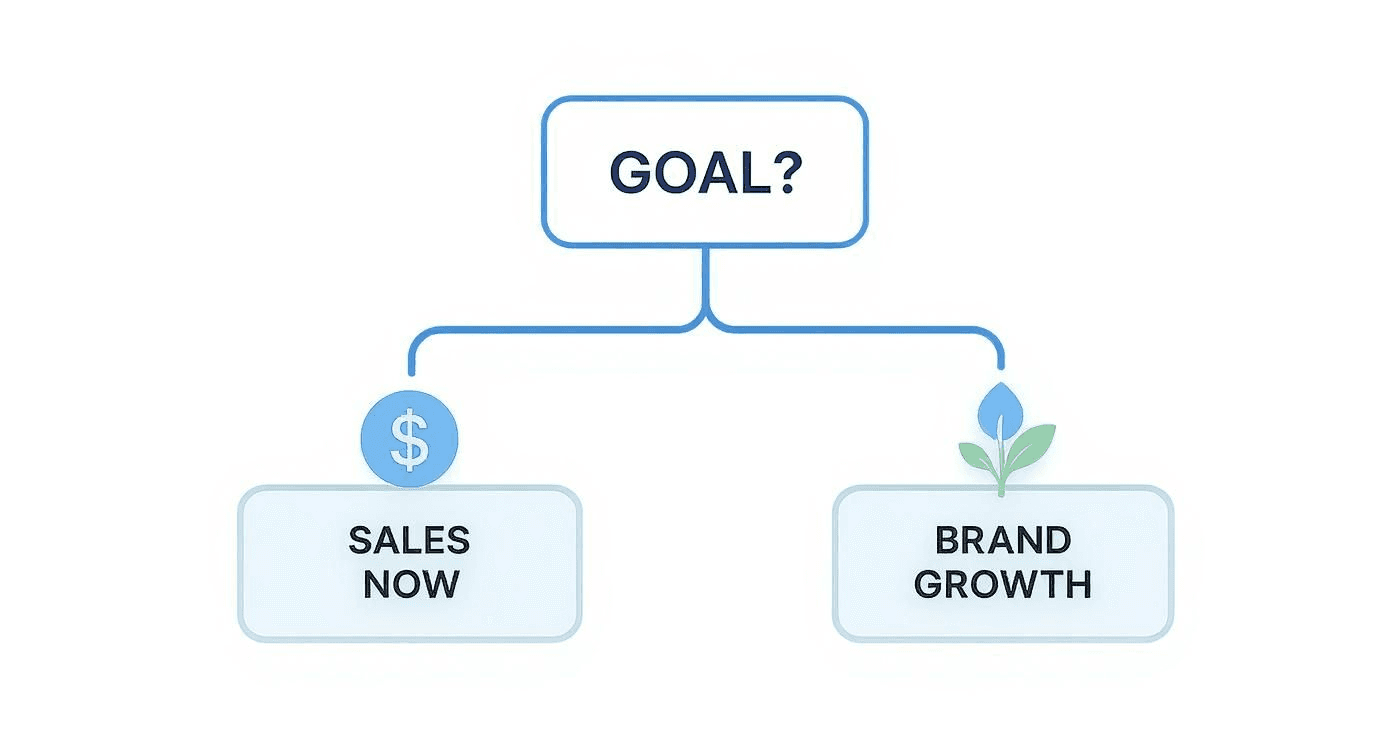
As you can see, there's a clear split. If you need to drive sales now, paid search is your most direct route. If you're playing the long game to build a sustainable brand and become an authority, organic search is the foundation you need to lay.
The Startup Playbook: Market Validation and Rapid Growth
For any early-stage startup, the most urgent need is market validation. You have to figure out—fast—if people want your product and what message makes them click. This is where paid search shines. A small, initial PPC push lets a startup test different value propositions and audiences without breaking the bank. You get immediate data on what's working, letting you iterate quickly before sinking resources into a long-term content plan.
E-commerce Strategy: The Hybrid Powerhouse
E-commerce businesses live and die by product visibility. The best strategy is almost always a hybrid approach. Use paid ads, especially Google Shopping ads, to go after transactional keywords like "buy men's leather work boots." At the same time, use SEO to build rich category pages and helpful content—like "how to choose the best work boots"—to catch customers earlier in their research phase. This strategy helps your branding and web presence cover all angles of the customer journey.
Local Service Businesses: Hyper-Targeted and Trust-Driven
For local businesses like plumbers or electricians, being seen in a specific geographic area is everything. The most effective game plan combines hyper-targeted paid ads with a solid Local SEO foundation. Geo-targeted ads let you pop up for urgent searches like "emergency plumber Naples FL," while a strong Local SEO focus—optimizing your Google Business Profile and getting reviews—builds trust and gets you into the "Map Pack."
The Established SMB: Defending and Expanding Territory
An established small-to-medium-sized business (SMB) needs a sophisticated, integrated approach. You're likely facing more competition and need to protect your market share while finding new growth opportunities.
For an established business, the goal is SERP dominance. Use paid ads to protect your branded keywords and target high-value commercial terms. Meanwhile, your SEO efforts should focus on expanding your reach with authoritative content that answers every possible customer question.
This integrated model creates a powerful offensive and defensive machine. To lay out a plan this comprehensive, using a structured guide can be a huge help. For a complete blueprint, check out our digital marketing strategy template. The real question is how to blend paid and organic search into a single plan that fits your business. When you need help crafting that perfect blend, the team at Nextus is here to build a strategy that drives real, measurable results.
Tools and Metrics to Measure Your Success
Choosing between paid and organic search is just the first step. A strategy is only as good as your ability to measure its impact. If you don't have the right tools and metrics, you’re flying blind, throwing money at channels without knowing what’s really moving the needle. Setting up proper analytics from day one isn't optional—it's essential for any small business marketing plan.
This means looking past vanity metrics like raw traffic and zeroing in on the Key Performance Indicators (KPIs) that connect directly to your business goals. Each channel has its own set of numbers that tell the real story.
Essential Tools and KPIs for Organic Search
Success with organic search is about building long-term authority. Your measurement must reflect that this is a marathon, not a sprint. The bedrock for any SEO effort is Google Search Console, a free platform that gives you insights straight from Google. Track key organic metrics like keyword rankings, organic traffic, and use tools like Ahrefs or Moz to monitor your backlink authority. High-quality backlinks are a huge vote of confidence from other websites.
Measuring Your Paid Search Performance
Paid search is a direct investment, so your metrics must be laser-focused on financial return. Your main hub is Google Ads, where you can track every dollar spent and every conversion earned. Your most important paid search KPIs include Cost-Per-Click (CPC), Conversion Rate, and Return On Ad Spend (ROAS). ROAS is the big one: it calculates the revenue you generate for every dollar you spend, directly proving if your campaigns are profitable.
A common hurdle for small businesses is trying to stitch together all these different data sources into a single, coherent picture. Juggling Google Analytics, Search Console, and Ads dashboards can get overwhelming fast.
This is where AI automations can be a game-changer. Tools like n8n allow you to build custom workflows that pull data from all your marketing platforms into one unified dashboard. Instead of spending hours manually exporting reports, you get a real-time, holistic view of your entire search performance. At Nextus, we help clients set up these automated systems to ensure every marketing decision is backed by clear, comprehensive data.
Frequently Asked Questions
Even with a solid plan, a few practical questions always pop up when wrestling with paid vs. organic search. Let's clear the air on some of the most common ones for small businesses.
Can I Stop SEO Once I Rank on Page One?
No. Hitting page one is a huge win, but it’s not a "set it and forget it" situation. Think of SEO as a constant process of maintenance. Your competitors are always trying to knock you off the top spot, and Google's algorithms are in a perpetual state of change.
A top ranking is like holding a championship belt. You don't just win it once; you have to defend it. That means keeping content fresh, monitoring site health, and continuing to build quality links to hold your ground.
How Much Should a Small Business Budget for Paid Search?
For a small business just dipping its toes into paid search, a great starting point is a test budget of $500 to $1,000 per month. This is usually enough to get meaningful data on which keywords are working, which ad copy hits the mark, and what your conversion rates look like, all without breaking the bank. After that initial one-to-three-month period, you can analyze your Return On Ad Spend (ROAS) and scale up your most profitable campaigns.
Do Paid Ads Help My Organic Rankings?
Not directly. Google has been clear that running paid ads won’t give your organic search rankings a direct boost. However, there are significant indirect benefits. Running paid campaigns increases brand visibility, which can lead to more people searching for you directly. That uptick in branded searches is a powerful signal to Google that your brand is becoming a known entity, which can help your authority over time.
Figuring out the perfect mix of paid and organic search is a complex game. The team at Nextus builds cohesive digital marketing plans that drive real, measurable results for businesses like yours. Find out more at https://www.nextus.solutions.
How to Integrate SEO and PPC for Maximum Impact
Thinking of paid vs. organic search as a battle is a costly mistake. The most successful marketing strategies don't pit them against each other; they make them work together. When you integrate SEO and PPC, you create a powerful, self-reinforcing system where each channel makes the other one better, driving results far greater than either could achieve alone.
This synergy isn't just a marketing buzzword. It’s a practical framework for smarter, data-driven growth. By combining the immediate feedback of paid ads with the long-term authority of organic search, you build a marketing flywheel that accelerates your entire digital presence.
Use PPC Data to Fuel a Smarter SEO Strategy
One of the biggest hurdles in SEO is the initial guesswork. You sink time and resources into creating content for keywords you think will convert, but you won't know for sure until months later. Paid search becomes your secret weapon, letting you de-risk that content investment.
When you run a Google Ads campaign, you get instant, granular data on which keywords are driving not just clicks, but actual conversions—sales, sign-ups, or phone calls. This paid search data is a goldmine for your organic strategy. Instead of guessing, you now have a validated list of high-intent keywords proven to generate revenue.
By testing keywords with a small PPC budget first, you're running a market test. You discover what your audience actually searches for when they're ready to buy, allowing you to confidently pour your SEO resources into content that targets these money-making terms.
Imagine a local trades professional running ads for different services. They might find that "emergency boiler repair" converts at 10%, while "new heating system installation" only converts at 2%. That insight tells them exactly where to focus their next big SEO push, building out a detailed service page and blog posts about emergency repairs to capture that high-converting organic traffic.
Amplify Your Best Content with Paid Ads
Your best SEO content—that in-depth guide or insightful case study—is a valuable long-term asset. The problem is, waiting for it to rank organically can feel like watching paint dry. Paid ads provide a shortcut, letting you get your best content in front of the right audience right now.
This tactic, called content amplification, hits two critical goals. First, it drives immediate, targeted traffic to your most valuable pages, generating leads from day one. Second, it gets more eyeballs on your content, which can attract natural, high-authority backlinks from other websites that discover it through your ads.
Retarget Organic Visitors to Drive Conversions
Not every visitor who finds you through a Google search is ready to buy on their first visit. They might be researching or get distracted. Without a way to bring them back, that hard-earned organic traffic is lost. This is where retargeting comes in.
Retargeting (also called remarketing) lets you serve targeted ads to people who have already visited your website. By placing a small piece of code on your site, you can build an audience of your organic visitors and show them specific ads as they browse other sites or social media.
This creates a powerful loop. A user might first discover your brand by reading an educational blog post. They may not convert right away, but you can then retarget them with a compelling offer, keeping your brand top-of-mind and guiding them back when they're ready to decide. Managing this kind of integrated approach can get complex, but a holistic provider like Nextus can build and manage these systems for you, ensuring no lead falls through the cracks.
Choosing the Right Search Strategy for Your Business
The paid vs. organic search debate isn't about finding one "best" answer. It's about finding the right answer for your business, right now. Your industry, business stage, and immediate goals all dictate which strategy will give you the most bang for your buck. A brand-new startup has different needs than an established local roofer, and their search strategy should reflect that.
The right choice starts with clarifying your main objective. This decision tree lays out how your core goal—whether it's immediate sales or long-term brand building—points you in the right direction.
As you can see, there's a clear split. If you need to drive sales now, paid search is your most direct route. If you're playing the long game to build a sustainable brand and become an authority, organic search is the foundation you need to lay.
The Startup Playbook: Market Validation and Rapid Growth
For any early-stage startup, the most urgent need is market validation. You have to figure out—fast—if people want your product and what message makes them click. This is where paid search shines. A small, initial PPC push lets a startup test different value propositions and audiences without breaking the bank. You get immediate data on what's working, letting you iterate quickly before sinking resources into a long-term content plan.
E-commerce Strategy: The Hybrid Powerhouse
E-commerce businesses live and die by product visibility. The best strategy is almost always a hybrid approach. Use paid ads, especially Google Shopping ads, to go after transactional keywords like "buy men's leather work boots." At the same time, use SEO to build rich category pages and helpful content—like "how to choose the best work boots"—to catch customers earlier in their research phase. This strategy helps your branding and web presence cover all angles of the customer journey.
Local Service Businesses: Hyper-Targeted and Trust-Driven
For local businesses like plumbers or electricians, being seen in a specific geographic area is everything. The most effective game plan combines hyper-targeted paid ads with a solid Local SEO foundation. Geo-targeted ads let you pop up for urgent searches like "emergency plumber Naples FL," while a strong Local SEO focus—optimizing your Google Business Profile and getting reviews—builds trust and gets you into the "Map Pack."
The Established SMB: Defending and Expanding Territory
An established small-to-medium-sized business (SMB) needs a sophisticated, integrated approach. You're likely facing more competition and need to protect your market share while finding new growth opportunities.
For an established business, the goal is SERP dominance. Use paid ads to protect your branded keywords and target high-value commercial terms. Meanwhile, your SEO efforts should focus on expanding your reach with authoritative content that answers every possible customer question.
This integrated model creates a powerful offensive and defensive machine. To lay out a plan this comprehensive, using a structured guide can be a huge help. For a complete blueprint, check out our digital marketing strategy template. The real question is how to blend paid and organic search into a single plan that fits your business. When you need help crafting that perfect blend, the team at Nextus is here to build a strategy that drives real, measurable results.
Tools and Metrics to Measure Your Success
Choosing between paid and organic search is just the first step. A strategy is only as good as your ability to measure its impact. If you don't have the right tools and metrics, you’re flying blind, throwing money at channels without knowing what’s really moving the needle. Setting up proper analytics from day one isn't optional—it's essential for any small business marketing plan.
This means looking past vanity metrics like raw traffic and zeroing in on the Key Performance Indicators (KPIs) that connect directly to your business goals. Each channel has its own set of numbers that tell the real story.
Essential Tools and KPIs for Organic Search
Success with organic search is about building long-term authority. Your measurement must reflect that this is a marathon, not a sprint. The bedrock for any SEO effort is Google Search Console, a free platform that gives you insights straight from Google. Track key organic metrics like keyword rankings, organic traffic, and use tools like Ahrefs or Moz to monitor your backlink authority. High-quality backlinks are a huge vote of confidence from other websites.
Measuring Your Paid Search Performance
Paid search is a direct investment, so your metrics must be laser-focused on financial return. Your main hub is Google Ads, where you can track every dollar spent and every conversion earned. Your most important paid search KPIs include Cost-Per-Click (CPC), Conversion Rate, and Return On Ad Spend (ROAS). ROAS is the big one: it calculates the revenue you generate for every dollar you spend, directly proving if your campaigns are profitable.
A common hurdle for small businesses is trying to stitch together all these different data sources into a single, coherent picture. Juggling Google Analytics, Search Console, and Ads dashboards can get overwhelming fast.
This is where AI automations can be a game-changer. Tools like n8n allow you to build custom workflows that pull data from all your marketing platforms into one unified dashboard. Instead of spending hours manually exporting reports, you get a real-time, holistic view of your entire search performance. At Nextus, we help clients set up these automated systems to ensure every marketing decision is backed by clear, comprehensive data.
Frequently Asked Questions
Even with a solid plan, a few practical questions always pop up when wrestling with paid vs. organic search. Let's clear the air on some of the most common ones for small businesses.
Can I Stop SEO Once I Rank on Page One?
No. Hitting page one is a huge win, but it’s not a "set it and forget it" situation. Think of SEO as a constant process of maintenance. Your competitors are always trying to knock you off the top spot, and Google's algorithms are in a perpetual state of change.
A top ranking is like holding a championship belt. You don't just win it once; you have to defend it. That means keeping content fresh, monitoring site health, and continuing to build quality links to hold your ground.
How Much Should a Small Business Budget for Paid Search?
For a small business just dipping its toes into paid search, a great starting point is a test budget of $500 to $1,000 per month. This is usually enough to get meaningful data on which keywords are working, which ad copy hits the mark, and what your conversion rates look like, all without breaking the bank. After that initial one-to-three-month period, you can analyze your Return On Ad Spend (ROAS) and scale up your most profitable campaigns.
Do Paid Ads Help My Organic Rankings?
Not directly. Google has been clear that running paid ads won’t give your organic search rankings a direct boost. However, there are significant indirect benefits. Running paid campaigns increases brand visibility, which can lead to more people searching for you directly. That uptick in branded searches is a powerful signal to Google that your brand is becoming a known entity, which can help your authority over time.
Figuring out the perfect mix of paid and organic search is a complex game. The team at Nextus builds cohesive digital marketing plans that drive real, measurable results for businesses like yours. Find out more at https://www.nextus.solutions.
How to Integrate SEO and PPC for Maximum Impact
Thinking of paid vs. organic search as a battle is a costly mistake. The most successful marketing strategies don't pit them against each other; they make them work together. When you integrate SEO and PPC, you create a powerful, self-reinforcing system where each channel makes the other one better, driving results far greater than either could achieve alone.
This synergy isn't just a marketing buzzword. It’s a practical framework for smarter, data-driven growth. By combining the immediate feedback of paid ads with the long-term authority of organic search, you build a marketing flywheel that accelerates your entire digital presence.
Use PPC Data to Fuel a Smarter SEO Strategy
One of the biggest hurdles in SEO is the initial guesswork. You sink time and resources into creating content for keywords you think will convert, but you won't know for sure until months later. Paid search becomes your secret weapon, letting you de-risk that content investment.
When you run a Google Ads campaign, you get instant, granular data on which keywords are driving not just clicks, but actual conversions—sales, sign-ups, or phone calls. This paid search data is a goldmine for your organic strategy. Instead of guessing, you now have a validated list of high-intent keywords proven to generate revenue.
By testing keywords with a small PPC budget first, you're running a market test. You discover what your audience actually searches for when they're ready to buy, allowing you to confidently pour your SEO resources into content that targets these money-making terms.
Imagine a local trades professional running ads for different services. They might find that "emergency boiler repair" converts at 10%, while "new heating system installation" only converts at 2%. That insight tells them exactly where to focus their next big SEO push, building out a detailed service page and blog posts about emergency repairs to capture that high-converting organic traffic.
Amplify Your Best Content with Paid Ads
Your best SEO content—that in-depth guide or insightful case study—is a valuable long-term asset. The problem is, waiting for it to rank organically can feel like watching paint dry. Paid ads provide a shortcut, letting you get your best content in front of the right audience right now.
This tactic, called content amplification, hits two critical goals. First, it drives immediate, targeted traffic to your most valuable pages, generating leads from day one. Second, it gets more eyeballs on your content, which can attract natural, high-authority backlinks from other websites that discover it through your ads.
Retarget Organic Visitors to Drive Conversions
Not every visitor who finds you through a Google search is ready to buy on their first visit. They might be researching or get distracted. Without a way to bring them back, that hard-earned organic traffic is lost. This is where retargeting comes in.
Retargeting (also called remarketing) lets you serve targeted ads to people who have already visited your website. By placing a small piece of code on your site, you can build an audience of your organic visitors and show them specific ads as they browse other sites or social media.
This creates a powerful loop. A user might first discover your brand by reading an educational blog post. They may not convert right away, but you can then retarget them with a compelling offer, keeping your brand top-of-mind and guiding them back when they're ready to decide. Managing this kind of integrated approach can get complex, but a holistic provider like Nextus can build and manage these systems for you, ensuring no lead falls through the cracks.
Choosing the Right Search Strategy for Your Business
The paid vs. organic search debate isn't about finding one "best" answer. It's about finding the right answer for your business, right now. Your industry, business stage, and immediate goals all dictate which strategy will give you the most bang for your buck. A brand-new startup has different needs than an established local roofer, and their search strategy should reflect that.
The right choice starts with clarifying your main objective. This decision tree lays out how your core goal—whether it's immediate sales or long-term brand building—points you in the right direction.
As you can see, there's a clear split. If you need to drive sales now, paid search is your most direct route. If you're playing the long game to build a sustainable brand and become an authority, organic search is the foundation you need to lay.
The Startup Playbook: Market Validation and Rapid Growth
For any early-stage startup, the most urgent need is market validation. You have to figure out—fast—if people want your product and what message makes them click. This is where paid search shines. A small, initial PPC push lets a startup test different value propositions and audiences without breaking the bank. You get immediate data on what's working, letting you iterate quickly before sinking resources into a long-term content plan.
E-commerce Strategy: The Hybrid Powerhouse
E-commerce businesses live and die by product visibility. The best strategy is almost always a hybrid approach. Use paid ads, especially Google Shopping ads, to go after transactional keywords like "buy men's leather work boots." At the same time, use SEO to build rich category pages and helpful content—like "how to choose the best work boots"—to catch customers earlier in their research phase. This strategy helps your branding and web presence cover all angles of the customer journey.
Local Service Businesses: Hyper-Targeted and Trust-Driven
For local businesses like plumbers or electricians, being seen in a specific geographic area is everything. The most effective game plan combines hyper-targeted paid ads with a solid Local SEO foundation. Geo-targeted ads let you pop up for urgent searches like "emergency plumber Naples FL," while a strong Local SEO focus—optimizing your Google Business Profile and getting reviews—builds trust and gets you into the "Map Pack."
The Established SMB: Defending and Expanding Territory
An established small-to-medium-sized business (SMB) needs a sophisticated, integrated approach. You're likely facing more competition and need to protect your market share while finding new growth opportunities.
For an established business, the goal is SERP dominance. Use paid ads to protect your branded keywords and target high-value commercial terms. Meanwhile, your SEO efforts should focus on expanding your reach with authoritative content that answers every possible customer question.
This integrated model creates a powerful offensive and defensive machine. To lay out a plan this comprehensive, using a structured guide can be a huge help. For a complete blueprint, check out our digital marketing strategy template. The real question is how to blend paid and organic search into a single plan that fits your business. When you need help crafting that perfect blend, the team at Nextus is here to build a strategy that drives real, measurable results.
Tools and Metrics to Measure Your Success
Choosing between paid and organic search is just the first step. A strategy is only as good as your ability to measure its impact. If you don't have the right tools and metrics, you’re flying blind, throwing money at channels without knowing what’s really moving the needle. Setting up proper analytics from day one isn't optional—it's essential for any small business marketing plan.
This means looking past vanity metrics like raw traffic and zeroing in on the Key Performance Indicators (KPIs) that connect directly to your business goals. Each channel has its own set of numbers that tell the real story.
Essential Tools and KPIs for Organic Search
Success with organic search is about building long-term authority. Your measurement must reflect that this is a marathon, not a sprint. The bedrock for any SEO effort is Google Search Console, a free platform that gives you insights straight from Google. Track key organic metrics like keyword rankings, organic traffic, and use tools like Ahrefs or Moz to monitor your backlink authority. High-quality backlinks are a huge vote of confidence from other websites.
Measuring Your Paid Search Performance
Paid search is a direct investment, so your metrics must be laser-focused on financial return. Your main hub is Google Ads, where you can track every dollar spent and every conversion earned. Your most important paid search KPIs include Cost-Per-Click (CPC), Conversion Rate, and Return On Ad Spend (ROAS). ROAS is the big one: it calculates the revenue you generate for every dollar you spend, directly proving if your campaigns are profitable.
A common hurdle for small businesses is trying to stitch together all these different data sources into a single, coherent picture. Juggling Google Analytics, Search Console, and Ads dashboards can get overwhelming fast.
This is where AI automations can be a game-changer. Tools like n8n allow you to build custom workflows that pull data from all your marketing platforms into one unified dashboard. Instead of spending hours manually exporting reports, you get a real-time, holistic view of your entire search performance. At Nextus, we help clients set up these automated systems to ensure every marketing decision is backed by clear, comprehensive data.
Frequently Asked Questions
Even with a solid plan, a few practical questions always pop up when wrestling with paid vs. organic search. Let's clear the air on some of the most common ones for small businesses.
Can I Stop SEO Once I Rank on Page One?
No. Hitting page one is a huge win, but it’s not a "set it and forget it" situation. Think of SEO as a constant process of maintenance. Your competitors are always trying to knock you off the top spot, and Google's algorithms are in a perpetual state of change.
A top ranking is like holding a championship belt. You don't just win it once; you have to defend it. That means keeping content fresh, monitoring site health, and continuing to build quality links to hold your ground.
How Much Should a Small Business Budget for Paid Search?
For a small business just dipping its toes into paid search, a great starting point is a test budget of $500 to $1,000 per month. This is usually enough to get meaningful data on which keywords are working, which ad copy hits the mark, and what your conversion rates look like, all without breaking the bank. After that initial one-to-three-month period, you can analyze your Return On Ad Spend (ROAS) and scale up your most profitable campaigns.
Do Paid Ads Help My Organic Rankings?
Not directly. Google has been clear that running paid ads won’t give your organic search rankings a direct boost. However, there are significant indirect benefits. Running paid campaigns increases brand visibility, which can lead to more people searching for you directly. That uptick in branded searches is a powerful signal to Google that your brand is becoming a known entity, which can help your authority over time.
Figuring out the perfect mix of paid and organic search is a complex game. The team at Nextus builds cohesive digital marketing plans that drive real, measurable results for businesses like yours. Find out more at https://www.nextus.solutions.

2025
What Is Search Engine Optimization? A Practical Guide to Boosting Your Website Traffic
2025
What Is Search Engine Optimization? A Practical Guide to Boosting Your Website Traffic
2025
What Is Search Engine Optimization? A Practical Guide to Boosting Your Website Traffic
2025
A Practical Guide to Digital Marketing for Local Businesses
2025
A Practical Guide to Digital Marketing for Local Businesses
2025
A Practical Guide to Digital Marketing for Local Businesses
Frequently
Frequently
Asked Questions
Questions
Asked QuestionS
What services do you offer as a branding agency?
What industries do you specialize in?
How Does Pricing Work?
Can you provide examples of your previous work?
How do you approach Client branding projects?
What's the best way to learn more or work together?
What services do you offer as a branding agency?
What industries do you specialize in?
How Does Pricing Work?
Can you provide examples of your previous work?
How do you approach Client branding projects?
What's the best way to learn more or work together?
What services do you offer as a branding agency?
What industries do you specialize in?
How Does Pricing Work?
Can you provide examples of your previous work?
How do you approach Client branding projects?
What's the best way to learn more or work together?
FREE AUDIT?