
📢 CONTACT US FOR A FREE AUDIT, CONSULTATION, OR BRAND ANALYSIS. WE WANT TO HELP HOWEVER WE CAN 🏁 BUILD YOUR BRAND, SELL THE WOW FACTOR, AND LET US DO THE THINKING AHEAD 🧠
📢 CONTACT US FOR A FREE AUDIT, CONSULTATION, OR BRAND ANALYSIS. WE WANT TO HELP HOWEVER WE CAN 🏁 BUILD YOUR BRAND, SELL THE WOW FACTOR, AND LET US DO THE THINKING AHEAD 🧠
📢 CONTACT US FOR A FREE AUDIT, CONSULTATION, OR BRAND ANALYSIS. WE WANT TO HELP HOWEVER WE CAN 🏁 BUILD YOUR BRAND, SELL THE WOW FACTOR, AND LET US DO THE THINKING AHEAD 🧠
7 Actionable UX Lessons from Sites That Get It Right
7 Actionable UX Lessons from Sites That Get It Right
UX
Websites
Listicle
Examples


In a crowded digital marketplace, a standout website isn’t just about flashy visuals; it's about creating a seamless, intuitive, and enjoyable journey for your visitors. This journey is called User Experience (UX), and it's the invisible force that turns casual browsers into loyal customers. A great UX builds trust, boosts conversions, and improves your SEO by signaling to search engines that your site provides genuine value. A seamless user experience is fundamental to customer satisfaction. For more insights, explore these top strategies to improve ecommerce customer experience.
However, knowing what separates 'good' from 'great' can be challenging for business owners and marketing managers. How do you translate abstract principles into tangible results like higher engagement and more leads? This article cuts through the noise. We're breaking down 7 exceptional sites with good UX, analyzing precisely what they do right, from frictionless navigation to compelling calls-to-action. Each example includes screenshots, direct links, and actionable takeaways you can apply directly to your own digital presence. Let's explore the strategic thinking behind top-tier web design and learn how to implement these proven methods.
1. Nextus Digital Solutions
Nextus Digital Solutions earns its top spot by demonstrating that exceptional user experience is not just about a visually appealing interface; it’s about a seamless, strategy-driven journey from the first click to the final conversion. As a full-service startup branding and web design agency, their own website serves as a masterclass in clarity, trust-building, and user empowerment. It perfectly embodies their core value proposition: blending data-driven strategy with creative storytelling to build high-converting digital experiences. This approach makes their site a prime example of good UX in action.
What immediately sets Nextus apart is its transparent and intuitive information architecture. "Information architecture" is simply the way content is organized on a site to help users find what they need. For its target audience of founders and business owners, who are often time-poor and goal-oriented, the site wastes no time. It immediately communicates its value, showcases its work, and presents a clear, low-friction path to engagement.
Strategic Breakdown: Key UX Strengths
Transparent Path to Engagement Nextus avoids the vague "Contact Us for a Quote" trap that plagues many agency sites. Instead, they provide structured, tiered pricing packages with clearly defined deliverables. This transparency respects the user's time and budget, allowing potential clients to self-qualify and understand the investment required. This approach builds immediate trust and removes a major point of friction in the sales process.
User-Centric Content Hierarchy The site's layout guides users logically through the customer journey. It starts with addressing the user’s problem, presents Nextus as the solution with a showcase of services (from SEO analytics to 3D modeling), and validates their claims with a portfolio and powerful client testimonials. This structured flow ensures that visitors find the information they need precisely when they need it, which is a hallmark of sites with good ux. The clear, jargon-free copy explains complex services like AI automations and SEO in an accessible way.
Integrated Social Proof Testimonials and portfolio examples are not relegated to a single page. They are strategically woven throughout the site, providing context-relevant proof of expertise. Seeing a glowing review from an e-commerce brand next to the description of Shopify development services is far more impactful than seeing it on a generic testimonials page. This integration reinforces credibility at every touchpoint.
Actionable Takeaways for Your Business
Demystify Your Pricing If possible, offer transparent pricing tiers or packages. This reduces user anxiety, filters for serious clients, and shortens the sales cycle by answering the biggest question up front.
Structure Content Around the User's Journey Map your website content to answer key user questions in a logical order: What problem do you solve? How do you solve it? Why should I trust you?
Embed Proof, Don't Isolate It Place testimonials, case studies, and portfolio items directly alongside the relevant services or features you are describing. This reinforces your claims in real-time and makes your value proposition more tangible.
The team at Nextus exemplifies this client-centric philosophy. By prioritizing honest collaboration and transparent processes, they build not just websites, but lasting partnerships designed for growth. You can see the people behind this strategy and learn more about the Nextus Digital Solutions team and their approach.
For businesses ready to invest in a comprehensive digital presence, Nextus offers a compelling, well-rounded solution at https://www.nextus.solutions.
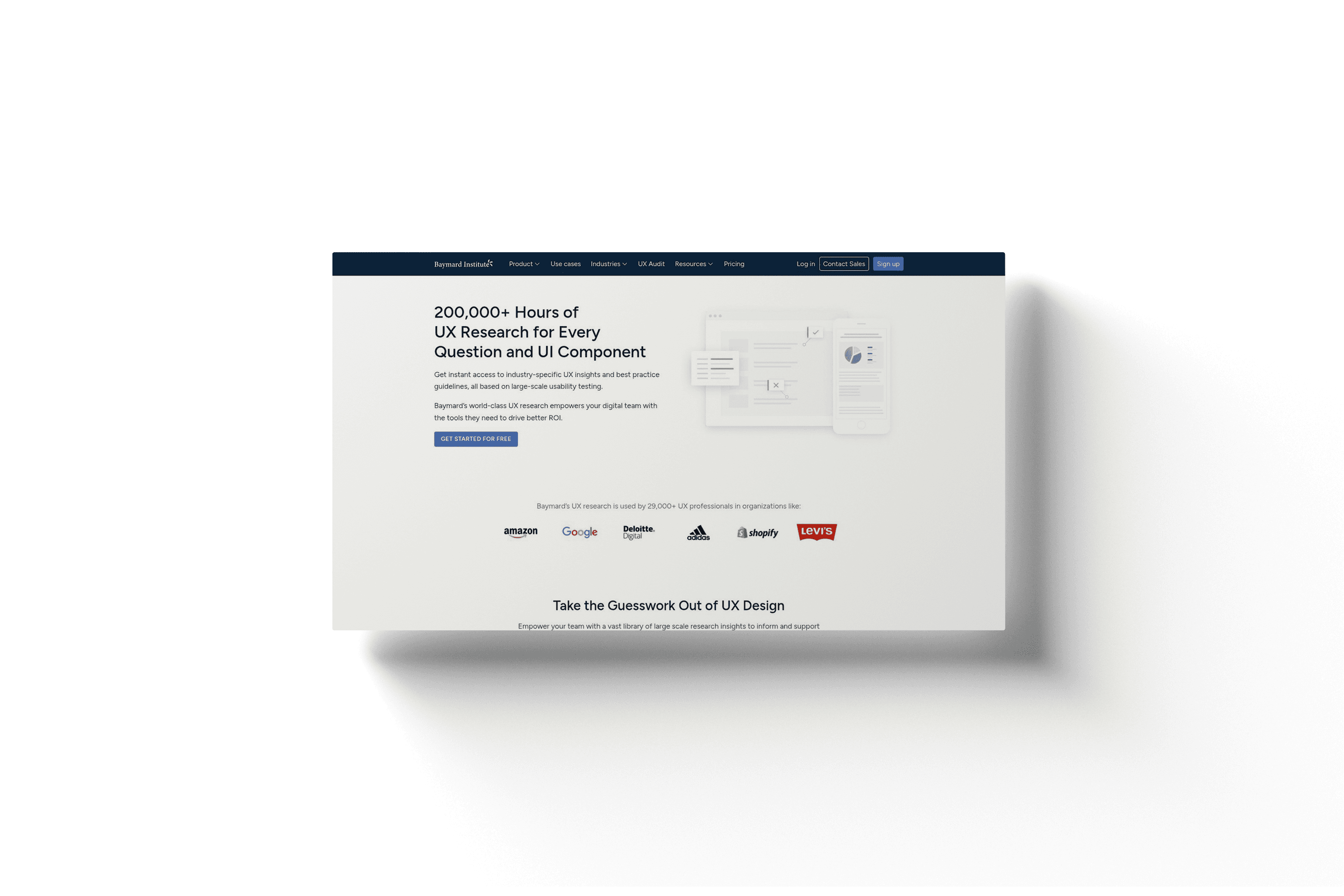
2. Baymard Institute
Baymard Institute is not just a website with good UX; it’s a masterclass in it. As an independent web usability research organization, Baymard’s own site practices what it preaches, offering an unparalleled experience for UX professionals, product managers, and designers seeking evidence-based guidance. Its core purpose is to provide an exhaustive library of research findings to help companies improve their own user experiences, particularly in e-commerce.
The platform stands out by replacing subjective design debates with objective, large-scale usability testing data. This commitment to research-backed content makes it a definitive resource for teams looking to make informed decisions that drive real business results.
Strategic Analysis: The Meta-UX of a UX Platform
Baymard's design brilliantly organizes a massive repository of information. Its navigation is a prime example of information architecture done right, allowing users to effortlessly filter through over 700 guidelines, 130,000+ benchmark data points, and countless case studies. This structured approach ensures users can find specific, actionable answers quickly without feeling overwhelmed.
The platform also excels at content presentation. Each guideline is broken down with clear examples of implementation pitfalls and successes, making complex research highly digestible. This clarity is a core component of its own good UX, demonstrating how to present dense information effectively.
Actionable Takeaways for Your Business
Structure Content for Scannability Baymard uses clear headings, short paragraphs, and visual examples to break down complex research. Apply this principle to your own content, especially for technical or detailed information. Make it easy for users to find exactly what they need without reading everything.
Provide Evidence-Based Value Baymard’s authority comes from its data. Support your product claims and marketing messages with data, testimonials, or case studies. This builds trust and helps users make confident decisions, which is a cornerstone of effective conversion rate optimization strategies.
Implement Tiered Access Clearly Baymard offers free public articles alongside its premium research. The value proposition for its paid plans is communicated transparently. If you have a freemium or tiered model, ensure the benefits of upgrading are obvious and compelling. Need help structuring your site's information architecture for clarity? The team at Nextus specializes in creating intuitive user flows.
You can visit the site here: https://baymard.com
3. Mobbin
Mobbin is an essential resource for product designers, developers, and marketers who want to understand what makes a great digital product. It's a massive, curated library of screenshots and user flows from the world’s best apps and websites. Its core purpose is to save teams countless hours of research by providing a searchable database of proven design patterns, from onboarding sequences to complex checkout processes.
The platform’s value lies in its comprehensive and meticulously tagged collection. Instead of manually downloading apps and taking screenshots, users can instantly access and analyze real-world examples to justify design decisions, find inspiration, and accelerate their workflow. This makes it one of the top-tier sites with good UX for professionals building their own products.
Strategic Analysis: The Efficiency of Visual Search
Mobbin’s own user experience is a masterclass in findability and organization. The platform’s true power is its robust filtering and search system, which allows users to drill down by app, UI element, design pattern, or user flow with incredible speed. This turns a potentially chaotic library of millions of screens into a highly functional and intuitive research tool.
The user interface is clean, minimalist, and focuses entirely on the content. By presenting screens and flows without distraction, Mobbin helps users concentrate on analyzing the design patterns themselves. This dedication to a frictionless research experience is a key part of its appeal and success.
Actionable Takeaways for Your Business
Make Your Content Highly Filterable Mobbin proves that a great search experience is more than just a search bar. It uses tags and categories to let users refine results. If your site has a large inventory, blog, or portfolio, implement advanced filtering to help users find exactly what they need quickly, improving their overall experience.
Leverage Real-World Examples Mobbin's entire premise is based on social proof and learning from successful examples. Use case studies, testimonials, and real-world results to build credibility for your own products or services. Showing, not just telling, helps potential customers trust your brand and understand the value you provide.
Clarify Your Pricing Tiers Mobbin offers immense value, but its pricing (quarterly or annual plans) isn't immediately visible. Ensure your own pricing is transparent and easy to understand to avoid user friction. If you offer different plans, clearly outline the features and benefits of each tier. Building a clear, user-friendly interface is crucial, and the team at Nextus can help you implement examples of responsive web design that works across all devices.
You can visit the site here: https://mobbin.com
4. Awwwards
Awwwards is more than just a gallery of beautiful websites; it's a dynamic ecosystem for creative inspiration and professional development. Serving as a premier showcase for award-winning web design and development, its primary purpose is to recognize and promote the talent of the world’s best designers, developers, and agencies. For anyone looking for sites with good UX, Awwwards offers a curated look into the future of digital interaction.
The platform stands out by creating a community around digital excellence, where professionals can submit their work for evaluation by an expert jury. This community-driven, peer-review model ensures a constant influx of high-quality, forward-leaning examples that set industry benchmarks for aesthetics and innovative user interactions, making it an essential resource for creative professionals.
Strategic Analysis: The UX of Digital Curation
Awwwards excels at presenting a massive volume of visual content in an engaging and accessible way. Its grid-based layout and sophisticated filtering system allow users to seamlessly browse thousands of websites by category, tag, technology, color, and country. This powerful discovery engine is a core part of its own user experience, making inspiration easy to find.
The site also masterfully balances inspiration with education through its Awwwards Academy. It integrates learning opportunities directly into the user journey, offering courses from industry leaders on topics seen in the award-winning sites. This creates a cohesive ecosystem where users can not only see what’s possible but also learn how to achieve it.
Actionable Takeaways for Your Business
Create Powerful Visual Discovery Awwwards proves that a strong visual hierarchy and robust filtering can make large content libraries feel manageable. If your site features a portfolio, product catalog, or resource hub, invest in intuitive categorization and filtering to help users find exactly what they’re looking for with minimal effort.
Blend Content and Commerce Seamlessly The platform integrates its paid offerings, like the Creative Pass for courses and Pro memberships, organically into the browsing experience. When presenting your products or services, look for opportunities to place them in context where their value is most apparent, rather than relying solely on a dedicated "pricing" page.
Build a Community to Drive Engagement Awwwards thrives on user submissions and jury participation. Fostering a community around your brand can generate valuable content and build loyalty. Consider how you can empower your users to contribute, whether through reviews, case studies, or forums. Need help creating an engaging digital platform? Nextus builds websites designed to foster community and drive interaction.
You can visit the site here: https://www.awwwards.com
In a crowded digital marketplace, a standout website isn’t just about flashy visuals; it's about creating a seamless, intuitive, and enjoyable journey for your visitors. This journey is called User Experience (UX), and it's the invisible force that turns casual browsers into loyal customers. A great UX builds trust, boosts conversions, and improves your SEO by signaling to search engines that your site provides genuine value. A seamless user experience is fundamental to customer satisfaction. For more insights, explore these top strategies to improve ecommerce customer experience.
However, knowing what separates 'good' from 'great' can be challenging for business owners and marketing managers. How do you translate abstract principles into tangible results like higher engagement and more leads? This article cuts through the noise. We're breaking down 7 exceptional sites with good UX, analyzing precisely what they do right, from frictionless navigation to compelling calls-to-action. Each example includes screenshots, direct links, and actionable takeaways you can apply directly to your own digital presence. Let's explore the strategic thinking behind top-tier web design and learn how to implement these proven methods.
1. Nextus Digital Solutions
Nextus Digital Solutions earns its top spot by demonstrating that exceptional user experience is not just about a visually appealing interface; it’s about a seamless, strategy-driven journey from the first click to the final conversion. As a full-service startup branding and web design agency, their own website serves as a masterclass in clarity, trust-building, and user empowerment. It perfectly embodies their core value proposition: blending data-driven strategy with creative storytelling to build high-converting digital experiences. This approach makes their site a prime example of good UX in action.
What immediately sets Nextus apart is its transparent and intuitive information architecture. "Information architecture" is simply the way content is organized on a site to help users find what they need. For its target audience of founders and business owners, who are often time-poor and goal-oriented, the site wastes no time. It immediately communicates its value, showcases its work, and presents a clear, low-friction path to engagement.
Strategic Breakdown: Key UX Strengths
Transparent Path to Engagement Nextus avoids the vague "Contact Us for a Quote" trap that plagues many agency sites. Instead, they provide structured, tiered pricing packages with clearly defined deliverables. This transparency respects the user's time and budget, allowing potential clients to self-qualify and understand the investment required. This approach builds immediate trust and removes a major point of friction in the sales process.
User-Centric Content Hierarchy The site's layout guides users logically through the customer journey. It starts with addressing the user’s problem, presents Nextus as the solution with a showcase of services (from SEO analytics to 3D modeling), and validates their claims with a portfolio and powerful client testimonials. This structured flow ensures that visitors find the information they need precisely when they need it, which is a hallmark of sites with good ux. The clear, jargon-free copy explains complex services like AI automations and SEO in an accessible way.
Integrated Social Proof Testimonials and portfolio examples are not relegated to a single page. They are strategically woven throughout the site, providing context-relevant proof of expertise. Seeing a glowing review from an e-commerce brand next to the description of Shopify development services is far more impactful than seeing it on a generic testimonials page. This integration reinforces credibility at every touchpoint.
Actionable Takeaways for Your Business
Demystify Your Pricing If possible, offer transparent pricing tiers or packages. This reduces user anxiety, filters for serious clients, and shortens the sales cycle by answering the biggest question up front.
Structure Content Around the User's Journey Map your website content to answer key user questions in a logical order: What problem do you solve? How do you solve it? Why should I trust you?
Embed Proof, Don't Isolate It Place testimonials, case studies, and portfolio items directly alongside the relevant services or features you are describing. This reinforces your claims in real-time and makes your value proposition more tangible.
The team at Nextus exemplifies this client-centric philosophy. By prioritizing honest collaboration and transparent processes, they build not just websites, but lasting partnerships designed for growth. You can see the people behind this strategy and learn more about the Nextus Digital Solutions team and their approach.
For businesses ready to invest in a comprehensive digital presence, Nextus offers a compelling, well-rounded solution at https://www.nextus.solutions.
2. Baymard Institute
Baymard Institute is not just a website with good UX; it’s a masterclass in it. As an independent web usability research organization, Baymard’s own site practices what it preaches, offering an unparalleled experience for UX professionals, product managers, and designers seeking evidence-based guidance. Its core purpose is to provide an exhaustive library of research findings to help companies improve their own user experiences, particularly in e-commerce.
The platform stands out by replacing subjective design debates with objective, large-scale usability testing data. This commitment to research-backed content makes it a definitive resource for teams looking to make informed decisions that drive real business results.
Strategic Analysis: The Meta-UX of a UX Platform
Baymard's design brilliantly organizes a massive repository of information. Its navigation is a prime example of information architecture done right, allowing users to effortlessly filter through over 700 guidelines, 130,000+ benchmark data points, and countless case studies. This structured approach ensures users can find specific, actionable answers quickly without feeling overwhelmed.
The platform also excels at content presentation. Each guideline is broken down with clear examples of implementation pitfalls and successes, making complex research highly digestible. This clarity is a core component of its own good UX, demonstrating how to present dense information effectively.
Actionable Takeaways for Your Business
Structure Content for Scannability Baymard uses clear headings, short paragraphs, and visual examples to break down complex research. Apply this principle to your own content, especially for technical or detailed information. Make it easy for users to find exactly what they need without reading everything.
Provide Evidence-Based Value Baymard’s authority comes from its data. Support your product claims and marketing messages with data, testimonials, or case studies. This builds trust and helps users make confident decisions, which is a cornerstone of effective conversion rate optimization strategies.
Implement Tiered Access Clearly Baymard offers free public articles alongside its premium research. The value proposition for its paid plans is communicated transparently. If you have a freemium or tiered model, ensure the benefits of upgrading are obvious and compelling. Need help structuring your site's information architecture for clarity? The team at Nextus specializes in creating intuitive user flows.
You can visit the site here: https://baymard.com
3. Mobbin
Mobbin is an essential resource for product designers, developers, and marketers who want to understand what makes a great digital product. It's a massive, curated library of screenshots and user flows from the world’s best apps and websites. Its core purpose is to save teams countless hours of research by providing a searchable database of proven design patterns, from onboarding sequences to complex checkout processes.
The platform’s value lies in its comprehensive and meticulously tagged collection. Instead of manually downloading apps and taking screenshots, users can instantly access and analyze real-world examples to justify design decisions, find inspiration, and accelerate their workflow. This makes it one of the top-tier sites with good UX for professionals building their own products.
Strategic Analysis: The Efficiency of Visual Search
Mobbin’s own user experience is a masterclass in findability and organization. The platform’s true power is its robust filtering and search system, which allows users to drill down by app, UI element, design pattern, or user flow with incredible speed. This turns a potentially chaotic library of millions of screens into a highly functional and intuitive research tool.
The user interface is clean, minimalist, and focuses entirely on the content. By presenting screens and flows without distraction, Mobbin helps users concentrate on analyzing the design patterns themselves. This dedication to a frictionless research experience is a key part of its appeal and success.
Actionable Takeaways for Your Business
Make Your Content Highly Filterable Mobbin proves that a great search experience is more than just a search bar. It uses tags and categories to let users refine results. If your site has a large inventory, blog, or portfolio, implement advanced filtering to help users find exactly what they need quickly, improving their overall experience.
Leverage Real-World Examples Mobbin's entire premise is based on social proof and learning from successful examples. Use case studies, testimonials, and real-world results to build credibility for your own products or services. Showing, not just telling, helps potential customers trust your brand and understand the value you provide.
Clarify Your Pricing Tiers Mobbin offers immense value, but its pricing (quarterly or annual plans) isn't immediately visible. Ensure your own pricing is transparent and easy to understand to avoid user friction. If you offer different plans, clearly outline the features and benefits of each tier. Building a clear, user-friendly interface is crucial, and the team at Nextus can help you implement examples of responsive web design that works across all devices.
You can visit the site here: https://mobbin.com
4. Awwwards
Awwwards is more than just a gallery of beautiful websites; it's a dynamic ecosystem for creative inspiration and professional development. Serving as a premier showcase for award-winning web design and development, its primary purpose is to recognize and promote the talent of the world’s best designers, developers, and agencies. For anyone looking for sites with good UX, Awwwards offers a curated look into the future of digital interaction.
The platform stands out by creating a community around digital excellence, where professionals can submit their work for evaluation by an expert jury. This community-driven, peer-review model ensures a constant influx of high-quality, forward-leaning examples that set industry benchmarks for aesthetics and innovative user interactions, making it an essential resource for creative professionals.
Strategic Analysis: The UX of Digital Curation
Awwwards excels at presenting a massive volume of visual content in an engaging and accessible way. Its grid-based layout and sophisticated filtering system allow users to seamlessly browse thousands of websites by category, tag, technology, color, and country. This powerful discovery engine is a core part of its own user experience, making inspiration easy to find.
The site also masterfully balances inspiration with education through its Awwwards Academy. It integrates learning opportunities directly into the user journey, offering courses from industry leaders on topics seen in the award-winning sites. This creates a cohesive ecosystem where users can not only see what’s possible but also learn how to achieve it.
Actionable Takeaways for Your Business
Create Powerful Visual Discovery Awwwards proves that a strong visual hierarchy and robust filtering can make large content libraries feel manageable. If your site features a portfolio, product catalog, or resource hub, invest in intuitive categorization and filtering to help users find exactly what they’re looking for with minimal effort.
Blend Content and Commerce Seamlessly The platform integrates its paid offerings, like the Creative Pass for courses and Pro memberships, organically into the browsing experience. When presenting your products or services, look for opportunities to place them in context where their value is most apparent, rather than relying solely on a dedicated "pricing" page.
Build a Community to Drive Engagement Awwwards thrives on user submissions and jury participation. Fostering a community around your brand can generate valuable content and build loyalty. Consider how you can empower your users to contribute, whether through reviews, case studies, or forums. Need help creating an engaging digital platform? Nextus builds websites designed to foster community and drive interaction.
You can visit the site here: https://www.awwwards.com
In a crowded digital marketplace, a standout website isn’t just about flashy visuals; it's about creating a seamless, intuitive, and enjoyable journey for your visitors. This journey is called User Experience (UX), and it's the invisible force that turns casual browsers into loyal customers. A great UX builds trust, boosts conversions, and improves your SEO by signaling to search engines that your site provides genuine value. A seamless user experience is fundamental to customer satisfaction. For more insights, explore these top strategies to improve ecommerce customer experience.
However, knowing what separates 'good' from 'great' can be challenging for business owners and marketing managers. How do you translate abstract principles into tangible results like higher engagement and more leads? This article cuts through the noise. We're breaking down 7 exceptional sites with good UX, analyzing precisely what they do right, from frictionless navigation to compelling calls-to-action. Each example includes screenshots, direct links, and actionable takeaways you can apply directly to your own digital presence. Let's explore the strategic thinking behind top-tier web design and learn how to implement these proven methods.
1. Nextus Digital Solutions
Nextus Digital Solutions earns its top spot by demonstrating that exceptional user experience is not just about a visually appealing interface; it’s about a seamless, strategy-driven journey from the first click to the final conversion. As a full-service startup branding and web design agency, their own website serves as a masterclass in clarity, trust-building, and user empowerment. It perfectly embodies their core value proposition: blending data-driven strategy with creative storytelling to build high-converting digital experiences. This approach makes their site a prime example of good UX in action.
What immediately sets Nextus apart is its transparent and intuitive information architecture. "Information architecture" is simply the way content is organized on a site to help users find what they need. For its target audience of founders and business owners, who are often time-poor and goal-oriented, the site wastes no time. It immediately communicates its value, showcases its work, and presents a clear, low-friction path to engagement.
Strategic Breakdown: Key UX Strengths
Transparent Path to Engagement Nextus avoids the vague "Contact Us for a Quote" trap that plagues many agency sites. Instead, they provide structured, tiered pricing packages with clearly defined deliverables. This transparency respects the user's time and budget, allowing potential clients to self-qualify and understand the investment required. This approach builds immediate trust and removes a major point of friction in the sales process.
User-Centric Content Hierarchy The site's layout guides users logically through the customer journey. It starts with addressing the user’s problem, presents Nextus as the solution with a showcase of services (from SEO analytics to 3D modeling), and validates their claims with a portfolio and powerful client testimonials. This structured flow ensures that visitors find the information they need precisely when they need it, which is a hallmark of sites with good ux. The clear, jargon-free copy explains complex services like AI automations and SEO in an accessible way.
Integrated Social Proof Testimonials and portfolio examples are not relegated to a single page. They are strategically woven throughout the site, providing context-relevant proof of expertise. Seeing a glowing review from an e-commerce brand next to the description of Shopify development services is far more impactful than seeing it on a generic testimonials page. This integration reinforces credibility at every touchpoint.
Actionable Takeaways for Your Business
Demystify Your Pricing If possible, offer transparent pricing tiers or packages. This reduces user anxiety, filters for serious clients, and shortens the sales cycle by answering the biggest question up front.
Structure Content Around the User's Journey Map your website content to answer key user questions in a logical order: What problem do you solve? How do you solve it? Why should I trust you?
Embed Proof, Don't Isolate It Place testimonials, case studies, and portfolio items directly alongside the relevant services or features you are describing. This reinforces your claims in real-time and makes your value proposition more tangible.
The team at Nextus exemplifies this client-centric philosophy. By prioritizing honest collaboration and transparent processes, they build not just websites, but lasting partnerships designed for growth. You can see the people behind this strategy and learn more about the Nextus Digital Solutions team and their approach.
For businesses ready to invest in a comprehensive digital presence, Nextus offers a compelling, well-rounded solution at https://www.nextus.solutions.
2. Baymard Institute
Baymard Institute is not just a website with good UX; it’s a masterclass in it. As an independent web usability research organization, Baymard’s own site practices what it preaches, offering an unparalleled experience for UX professionals, product managers, and designers seeking evidence-based guidance. Its core purpose is to provide an exhaustive library of research findings to help companies improve their own user experiences, particularly in e-commerce.
The platform stands out by replacing subjective design debates with objective, large-scale usability testing data. This commitment to research-backed content makes it a definitive resource for teams looking to make informed decisions that drive real business results.
Strategic Analysis: The Meta-UX of a UX Platform
Baymard's design brilliantly organizes a massive repository of information. Its navigation is a prime example of information architecture done right, allowing users to effortlessly filter through over 700 guidelines, 130,000+ benchmark data points, and countless case studies. This structured approach ensures users can find specific, actionable answers quickly without feeling overwhelmed.
The platform also excels at content presentation. Each guideline is broken down with clear examples of implementation pitfalls and successes, making complex research highly digestible. This clarity is a core component of its own good UX, demonstrating how to present dense information effectively.
Actionable Takeaways for Your Business
Structure Content for Scannability Baymard uses clear headings, short paragraphs, and visual examples to break down complex research. Apply this principle to your own content, especially for technical or detailed information. Make it easy for users to find exactly what they need without reading everything.
Provide Evidence-Based Value Baymard’s authority comes from its data. Support your product claims and marketing messages with data, testimonials, or case studies. This builds trust and helps users make confident decisions, which is a cornerstone of effective conversion rate optimization strategies.
Implement Tiered Access Clearly Baymard offers free public articles alongside its premium research. The value proposition for its paid plans is communicated transparently. If you have a freemium or tiered model, ensure the benefits of upgrading are obvious and compelling. Need help structuring your site's information architecture for clarity? The team at Nextus specializes in creating intuitive user flows.
You can visit the site here: https://baymard.com
3. Mobbin
Mobbin is an essential resource for product designers, developers, and marketers who want to understand what makes a great digital product. It's a massive, curated library of screenshots and user flows from the world’s best apps and websites. Its core purpose is to save teams countless hours of research by providing a searchable database of proven design patterns, from onboarding sequences to complex checkout processes.
The platform’s value lies in its comprehensive and meticulously tagged collection. Instead of manually downloading apps and taking screenshots, users can instantly access and analyze real-world examples to justify design decisions, find inspiration, and accelerate their workflow. This makes it one of the top-tier sites with good UX for professionals building their own products.
Strategic Analysis: The Efficiency of Visual Search
Mobbin’s own user experience is a masterclass in findability and organization. The platform’s true power is its robust filtering and search system, which allows users to drill down by app, UI element, design pattern, or user flow with incredible speed. This turns a potentially chaotic library of millions of screens into a highly functional and intuitive research tool.
The user interface is clean, minimalist, and focuses entirely on the content. By presenting screens and flows without distraction, Mobbin helps users concentrate on analyzing the design patterns themselves. This dedication to a frictionless research experience is a key part of its appeal and success.
Actionable Takeaways for Your Business
Make Your Content Highly Filterable Mobbin proves that a great search experience is more than just a search bar. It uses tags and categories to let users refine results. If your site has a large inventory, blog, or portfolio, implement advanced filtering to help users find exactly what they need quickly, improving their overall experience.
Leverage Real-World Examples Mobbin's entire premise is based on social proof and learning from successful examples. Use case studies, testimonials, and real-world results to build credibility for your own products or services. Showing, not just telling, helps potential customers trust your brand and understand the value you provide.
Clarify Your Pricing Tiers Mobbin offers immense value, but its pricing (quarterly or annual plans) isn't immediately visible. Ensure your own pricing is transparent and easy to understand to avoid user friction. If you offer different plans, clearly outline the features and benefits of each tier. Building a clear, user-friendly interface is crucial, and the team at Nextus can help you implement examples of responsive web design that works across all devices.
You can visit the site here: https://mobbin.com
4. Awwwards
Awwwards is more than just a gallery of beautiful websites; it's a dynamic ecosystem for creative inspiration and professional development. Serving as a premier showcase for award-winning web design and development, its primary purpose is to recognize and promote the talent of the world’s best designers, developers, and agencies. For anyone looking for sites with good UX, Awwwards offers a curated look into the future of digital interaction.
The platform stands out by creating a community around digital excellence, where professionals can submit their work for evaluation by an expert jury. This community-driven, peer-review model ensures a constant influx of high-quality, forward-leaning examples that set industry benchmarks for aesthetics and innovative user interactions, making it an essential resource for creative professionals.
Strategic Analysis: The UX of Digital Curation
Awwwards excels at presenting a massive volume of visual content in an engaging and accessible way. Its grid-based layout and sophisticated filtering system allow users to seamlessly browse thousands of websites by category, tag, technology, color, and country. This powerful discovery engine is a core part of its own user experience, making inspiration easy to find.
The site also masterfully balances inspiration with education through its Awwwards Academy. It integrates learning opportunities directly into the user journey, offering courses from industry leaders on topics seen in the award-winning sites. This creates a cohesive ecosystem where users can not only see what’s possible but also learn how to achieve it.
Actionable Takeaways for Your Business
Create Powerful Visual Discovery Awwwards proves that a strong visual hierarchy and robust filtering can make large content libraries feel manageable. If your site features a portfolio, product catalog, or resource hub, invest in intuitive categorization and filtering to help users find exactly what they’re looking for with minimal effort.
Blend Content and Commerce Seamlessly The platform integrates its paid offerings, like the Creative Pass for courses and Pro memberships, organically into the browsing experience. When presenting your products or services, look for opportunities to place them in context where their value is most apparent, rather than relying solely on a dedicated "pricing" page.
Build a Community to Drive Engagement Awwwards thrives on user submissions and jury participation. Fostering a community around your brand can generate valuable content and build loyalty. Consider how you can empower your users to contribute, whether through reviews, case studies, or forums. Need help creating an engaging digital platform? Nextus builds websites designed to foster community and drive interaction.
You can visit the site here: https://www.awwwards.com
5. Interaction Design Foundation (IxDF)
The Interaction Design Foundation (IxDF) serves as a vast educational ecosystem for UX professionals. More than just a course repository, its platform is engineered to guide users through a continuous learning journey. Its primary purpose is to provide affordable, high-quality design education, offering self-paced courses, masterclasses, and a global community to help designers at all levels upskill and stay current.
What sets IxDF apart is its membership-based, all-you-can-learn model, which democratizes UX education. For a low annual fee, members get unlimited access to a broad catalog of university-level courses, making it a compelling alternative to expensive bootcamps or one-off classes. This approach positions it as a go-to resource for structured, ongoing professional development.
Strategic Analysis: The UX of a Learning Experience
IxDF’s user experience is meticulously designed to reduce learning friction and promote course completion. The dashboard presents a clear, personalized learning path, suggesting courses based on the user's career goals and progress. This guided journey turns a potentially overwhelming library into a manageable, step-by-step curriculum, which is key for user retention.
The platform excels at creating a sense of community and achievement. Features like verifiable certificates, course progress trackers, and forums foster engagement and motivation. This focus on the holistic learning experience, not just the content, is a prime example of user-centric design that makes it one of the top sites with good UX for education.
Actionable Takeaways for Your Business
Create Guided User Journeys IxDF doesn't just display courses; it curates learning paths. For platforms with extensive content or product catalogs, guide users toward their goals with personalized recommendations and clear next steps. This reduces choice paralysis and increases engagement.
Build Community to Drive Retention IxDF uses forums and local meetups to turn a solo learning experience into a communal one. Integrate community features like forums, user groups, or events to build a loyal user base that feels connected to your brand and to each other.
Offer a Clear, Compelling Value Proposition The "all-inclusive membership" model is simple and powerful. IxDF clearly communicates the benefits of its annual subscription. If you offer a subscription or membership, ensure your value is instantly understandable and transparently priced. Need help designing a clear value proposition for your site? The team at Nextus can refine your messaging and user flow.
You can visit the site here: https://www.interaction-design.org
6. Google UX Design Professional Certificate (Coursera)
The landing page for Google's UX Design Professional Certificate on Coursera is a prime example of user experience tailored to its exact audience: aspiring designers. It doesn't just sell a course; it guides a potential student through a journey, clearly outlining the value, curriculum, and career outcomes. Its primary function is to convert interested learners into enrolled students by building confidence and demystifying the path to a UX career.
The platform excels by structuring its vast amount of information into a logical, persuasive narrative. It answers questions before they are even asked, addressing everything from course content and instructor credentials to potential salaries and job opportunities. This proactive approach makes it one of the best sites with good UX for educational content.
Strategic Analysis: Designing a User-Centric Learning Path
Coursera's design for the Google certificate program is a masterclass in information hierarchy. The page uses a clear, linear flow that mirrors a user's decision-making process, starting with the big promise ("Start your career as a UX designer") and progressively drilling down into details like course modules, hands-on projects, and enrollment options. This guided experience prevents cognitive overload and keeps users engaged.
The platform masterfully integrates social proof and tangible outcomes. By showcasing learner reviews, portfolio projects, and statistics on career advancement, it transforms an abstract educational product into a concrete and achievable goal. The consistent, motivating language and clear calls-to-action make the enrollment process feel like the natural next step.
Actionable Takeaways for Your Business
Create a Guided User Journey Structure your landing pages to walk users through a story, from problem awareness to your solution. Anticipate their questions and answer them sequentially. This builds momentum and makes the final conversion feel intuitive rather than forced.
Leverage Social Proof and Tangible Outcomes Don't just list features; show results. Use testimonials, case studies, or data to demonstrate the real-world value of your offering. This builds trust and helps users visualize their own success, which is a powerful conversion driver.
Clarify Complex Pricing or Offerings The certificate's enrollment options, including the Coursera Plus subscription, are explained simply. If you offer tiered services or subscription models, present the information with transparent comparison tables or clear benefit-driven descriptions. Need help creating a user flow that clarifies your value proposition? The Nextus team specializes in designing intuitive digital experiences.
You can visit the site here: https://www.coursera.org/professional-certificates/google-ux-design
7. Amazon – UX/Design Books
While Amazon as a whole is a behemoth of e-commerce, its specialized sections, like the marketplace for UX and design books, serve as a masterclass in frictionless purchasing. For UX professionals, designers, and students, it offers a centralized, efficient, and reliable platform to build a comprehensive library. Its core purpose is to leverage a massive logistics network and user-generated content to make finding and acquiring specific knowledge resources as simple as possible.
The platform stands out by combining an enormous selection with powerful social proof and multiple formats. From foundational texts to contemporary guides, users can choose between print, Kindle, and Audible versions, often on the same product page. This blend of choice and convenience makes it an indispensable tool for continuous professional development in the design industry.
Strategic Analysis: The UX of Curation and Convenience
Amazon's UX for book purchasing is a finely tuned engine designed for discovery and conversion. The platform brilliantly uses customer data to power its "Frequently bought together" and "Customers who viewed this item also viewed" sections, creating a guided discovery path that feels personalized and genuinely helpful. This algorithmic curation helps users find relevant titles they might not have known to search for.
Furthermore, the integration of user reviews, ratings, and customer-uploaded photos provides invaluable social proof. A user can quickly gauge a book's value not just from the publisher's description but from the collective experience of hundreds of peers. This user-generated content is a cornerstone of its good UX, building trust and reducing purchase anxiety. The one-click buying and Prime delivery options remove nearly all friction from the final transaction.
Actionable Takeaways for Your Business
Leverage Social Proof for Trust Amazon places user ratings and reviews front and center. Integrate authentic customer testimonials, case studies, and reviews prominently on your product or service pages. This builds credibility and helps potential customers feel more confident in their decision-making process.
Create Smart Cross-Sells and Up-Sells Amazon’s recommendation engine is legendary. On your own site, use data to suggest complementary products or services. For example, if a customer is viewing a specific service, recommend a related add-on or a package deal that provides more value. This not only increases average order value but also improves the user's experience by anticipating their needs.
Streamline the Checkout Process Amazon's one-click purchase is the gold standard for a reason: it eliminates friction. Audit your own checkout flow to remove unnecessary steps, fields, and distractions. A simplified process reduces cart abandonment and is a key component of effective conversion rate optimization. If your e-commerce checkout feels clunky, the experts at Nextus can help design a seamless flow that converts.
You can visit the site here: https://www.amazon.com/s?k=ux+design+books
Top 7 UX Sites Comparison
Service | Implementation complexity 🔄 | Resource requirements ⚡ | Expected outcomes ⭐📊 | Ideal use cases | Key advantages 💡 |
|---|---|---|---|---|---|
Nextus Digital Solutions | High 🔄 — end-to-end strategy, design & production | Significant budget & stakeholder time; retainer (min 3 mo) ⚡ | Cohesive brand + higher conversions; measurable growth ⭐⭐⭐⭐📊 | Early-stage founders, premium SMBs, e‑commerce, trades needing full-service | In-house video/3D/SEO + data-driven storytelling; transparent packaged pricing 💡 |
Baymard Institute | Low 🔄 to use; moderate effort to apply recommendations | Paid subscription; team seats can be costly ⚡ | Evidence-based UX fixes and benchmarking; reliable UX improvements ⭐⭐⭐📊 | Enterprise e‑commerce and product UX teams needing research-backed guidance | 600–700+ tested guidelines, benchmarks and AI tools (UX‑Query, UX‑Ray) 💡 |
Mobbin | Low 🔄 — browse and copy proven patterns quickly | Subscription (quarterly min); team seats and downloads on paid plans ⚡ | Faster design ideation and pattern justification; saves research hours ⭐⭐⭐📊 | Product, growth, onboarding and checkout flow design | Massive curated screenshots/flows, filters, team libraries for workflow integration 💡 |
Awwwards | Low 🔄 for inspiration; applying avant-garde designs may require advanced dev | Free browsing; paid Academy/Pro (affordable learning tiers) ⚡ | High‑aesthetic benchmarks and trend insights; creative inspiration ⭐⭐⭐📊 | UX/UI inspiration, trend watching, portfolio building and exposure | Curated award winners, 100+ courses, pro directory and visibility opportunities 💡 |
Interaction Design Foundation (IxDF) | Low–Medium 🔄 — self‑paced courses + community activities | Low monthly fee; company/team plans available ⚡ | Structured continuous upskilling and certificates; steady skill growth ⭐⭐⭐📊 | Designers seeking ongoing, affordable upskilling and credentials | Large course catalog, verifiable certificates, community meetups 💡 |
Google UX Design Professional Certificate (Coursera) | Medium 🔄 — multi-course sequence with hands-on projects | Subscription (monthly/annual); time commitment for portfolio work ⚡ | Portfolio-ready projects and entry-level readiness; employer-recognized credential ⭐⭐⭐📊 | Beginners aiming for UX career transition and portfolio development | Clear curriculum, portfolio focus, Coursera career resources 💡 |
Amazon – UX/Design Books | Very Low 🔄 — buy and self-study at own pace | Pay-per-book; multiple formats (print/Kindle/Audible); Prime options ⚡ | Foundational knowledge and reference material; impact varies by title ⭐⭐📊 | Building a UX library, self-learners, quick reference needs | Vast selection, format flexibility, user reviews and fast/used options 💡 |
Turning Inspiration Into Action for Your Website
Throughout this article, we've explored a curated collection of sites with good ux, moving beyond simple aesthetics to dissect the strategic thinking that powers exceptional digital experiences. From the data-driven research of the Baymard Institute to the cutting-edge creative showcases on Awwwards, a clear pattern emerges. Superior UX is not a happy accident; it is the intentional outcome of empathy, rigorous testing, and a relentless focus on the user’s journey.
The common thread connecting these diverse examples is a commitment to removing friction and delivering value at every touchpoint. They answer the user's questions before they are asked, guide them intuitively toward their goals, and build trust through clarity and consistency. The key takeaway is not to copy these designs element for element, but to internalize the principles that make them effective.
From Principles to Practical Application
The true value of studying these examples lies in translating their underlying strategies into tangible improvements on your own platform. Begin by conducting a user-centric audit of your website. Ask critical questions: Does our homepage immediately communicate our core value proposition? Is our navigation simple enough for a first-time visitor to understand? How effectively are we using social proof, like testimonials and case studies, to build credibility?
Answering these questions honestly will reveal your biggest opportunities for UX enhancement. For instance, if you notice your product pages lack visual appeal and context, you might implement higher-quality imagery. For an e-commerce brand, this could mean using a phone case mockup generator to create professional product images that show your product in a real-world setting, helping users visualize its value and boosting conversion rates. This kind of tactical change, rooted in a strategic UX principle, is what separates passive inspiration from active improvement.
Choosing Your Path Forward
The resources we've covered, from Mobbin's app-focused pattern library to the foundational knowledge offered by the Interaction Design Foundation, provide a roadmap for this journey. Your choice of tool or resource should align with your immediate business goals. Are you struggling with high cart abandonment? Dive into Baymard's e-commerce checkout research. Are you a startup founder trying to define your brand's digital feel? Spend time absorbing the visual trends on Awwwards.
Ultimately, building a website with good UX is an ongoing process of learning, implementing, and iterating. It requires a mindset shift from "What do we want to tell our customers?" to "What do our customers need to achieve?" By placing the user at the heart of your design and development process, you create a digital asset that not only delights users but also drives sustainable business growth. If you find the process of integrating these complex UX strategies overwhelming, the expert team at Nextus is here to help you architect a digital presence that captivates your audience and delivers measurable results.
Feeling inspired but unsure where to start? Let the expert team at Nextus Digital Solutions translate these principles into a high-performing website tailored to your business. We specialize in creating conversion-focused digital experiences that turn visitors into loyal customers. Book a consultation today to start building a website that works as hard as you do.
5. Interaction Design Foundation (IxDF)
The Interaction Design Foundation (IxDF) serves as a vast educational ecosystem for UX professionals. More than just a course repository, its platform is engineered to guide users through a continuous learning journey. Its primary purpose is to provide affordable, high-quality design education, offering self-paced courses, masterclasses, and a global community to help designers at all levels upskill and stay current.
What sets IxDF apart is its membership-based, all-you-can-learn model, which democratizes UX education. For a low annual fee, members get unlimited access to a broad catalog of university-level courses, making it a compelling alternative to expensive bootcamps or one-off classes. This approach positions it as a go-to resource for structured, ongoing professional development.
Strategic Analysis: The UX of a Learning Experience
IxDF’s user experience is meticulously designed to reduce learning friction and promote course completion. The dashboard presents a clear, personalized learning path, suggesting courses based on the user's career goals and progress. This guided journey turns a potentially overwhelming library into a manageable, step-by-step curriculum, which is key for user retention.
The platform excels at creating a sense of community and achievement. Features like verifiable certificates, course progress trackers, and forums foster engagement and motivation. This focus on the holistic learning experience, not just the content, is a prime example of user-centric design that makes it one of the top sites with good UX for education.
Actionable Takeaways for Your Business
Create Guided User Journeys IxDF doesn't just display courses; it curates learning paths. For platforms with extensive content or product catalogs, guide users toward their goals with personalized recommendations and clear next steps. This reduces choice paralysis and increases engagement.
Build Community to Drive Retention IxDF uses forums and local meetups to turn a solo learning experience into a communal one. Integrate community features like forums, user groups, or events to build a loyal user base that feels connected to your brand and to each other.
Offer a Clear, Compelling Value Proposition The "all-inclusive membership" model is simple and powerful. IxDF clearly communicates the benefits of its annual subscription. If you offer a subscription or membership, ensure your value is instantly understandable and transparently priced. Need help designing a clear value proposition for your site? The team at Nextus can refine your messaging and user flow.
You can visit the site here: https://www.interaction-design.org
6. Google UX Design Professional Certificate (Coursera)
The landing page for Google's UX Design Professional Certificate on Coursera is a prime example of user experience tailored to its exact audience: aspiring designers. It doesn't just sell a course; it guides a potential student through a journey, clearly outlining the value, curriculum, and career outcomes. Its primary function is to convert interested learners into enrolled students by building confidence and demystifying the path to a UX career.
The platform excels by structuring its vast amount of information into a logical, persuasive narrative. It answers questions before they are even asked, addressing everything from course content and instructor credentials to potential salaries and job opportunities. This proactive approach makes it one of the best sites with good UX for educational content.
Strategic Analysis: Designing a User-Centric Learning Path
Coursera's design for the Google certificate program is a masterclass in information hierarchy. The page uses a clear, linear flow that mirrors a user's decision-making process, starting with the big promise ("Start your career as a UX designer") and progressively drilling down into details like course modules, hands-on projects, and enrollment options. This guided experience prevents cognitive overload and keeps users engaged.
The platform masterfully integrates social proof and tangible outcomes. By showcasing learner reviews, portfolio projects, and statistics on career advancement, it transforms an abstract educational product into a concrete and achievable goal. The consistent, motivating language and clear calls-to-action make the enrollment process feel like the natural next step.
Actionable Takeaways for Your Business
Create a Guided User Journey Structure your landing pages to walk users through a story, from problem awareness to your solution. Anticipate their questions and answer them sequentially. This builds momentum and makes the final conversion feel intuitive rather than forced.
Leverage Social Proof and Tangible Outcomes Don't just list features; show results. Use testimonials, case studies, or data to demonstrate the real-world value of your offering. This builds trust and helps users visualize their own success, which is a powerful conversion driver.
Clarify Complex Pricing or Offerings The certificate's enrollment options, including the Coursera Plus subscription, are explained simply. If you offer tiered services or subscription models, present the information with transparent comparison tables or clear benefit-driven descriptions. Need help creating a user flow that clarifies your value proposition? The Nextus team specializes in designing intuitive digital experiences.
You can visit the site here: https://www.coursera.org/professional-certificates/google-ux-design
7. Amazon – UX/Design Books
While Amazon as a whole is a behemoth of e-commerce, its specialized sections, like the marketplace for UX and design books, serve as a masterclass in frictionless purchasing. For UX professionals, designers, and students, it offers a centralized, efficient, and reliable platform to build a comprehensive library. Its core purpose is to leverage a massive logistics network and user-generated content to make finding and acquiring specific knowledge resources as simple as possible.
The platform stands out by combining an enormous selection with powerful social proof and multiple formats. From foundational texts to contemporary guides, users can choose between print, Kindle, and Audible versions, often on the same product page. This blend of choice and convenience makes it an indispensable tool for continuous professional development in the design industry.
Strategic Analysis: The UX of Curation and Convenience
Amazon's UX for book purchasing is a finely tuned engine designed for discovery and conversion. The platform brilliantly uses customer data to power its "Frequently bought together" and "Customers who viewed this item also viewed" sections, creating a guided discovery path that feels personalized and genuinely helpful. This algorithmic curation helps users find relevant titles they might not have known to search for.
Furthermore, the integration of user reviews, ratings, and customer-uploaded photos provides invaluable social proof. A user can quickly gauge a book's value not just from the publisher's description but from the collective experience of hundreds of peers. This user-generated content is a cornerstone of its good UX, building trust and reducing purchase anxiety. The one-click buying and Prime delivery options remove nearly all friction from the final transaction.
Actionable Takeaways for Your Business
Leverage Social Proof for Trust Amazon places user ratings and reviews front and center. Integrate authentic customer testimonials, case studies, and reviews prominently on your product or service pages. This builds credibility and helps potential customers feel more confident in their decision-making process.
Create Smart Cross-Sells and Up-Sells Amazon’s recommendation engine is legendary. On your own site, use data to suggest complementary products or services. For example, if a customer is viewing a specific service, recommend a related add-on or a package deal that provides more value. This not only increases average order value but also improves the user's experience by anticipating their needs.
Streamline the Checkout Process Amazon's one-click purchase is the gold standard for a reason: it eliminates friction. Audit your own checkout flow to remove unnecessary steps, fields, and distractions. A simplified process reduces cart abandonment and is a key component of effective conversion rate optimization. If your e-commerce checkout feels clunky, the experts at Nextus can help design a seamless flow that converts.
You can visit the site here: https://www.amazon.com/s?k=ux+design+books
Top 7 UX Sites Comparison
Service | Implementation complexity 🔄 | Resource requirements ⚡ | Expected outcomes ⭐📊 | Ideal use cases | Key advantages 💡 |
|---|---|---|---|---|---|
Nextus Digital Solutions | High 🔄 — end-to-end strategy, design & production | Significant budget & stakeholder time; retainer (min 3 mo) ⚡ | Cohesive brand + higher conversions; measurable growth ⭐⭐⭐⭐📊 | Early-stage founders, premium SMBs, e‑commerce, trades needing full-service | In-house video/3D/SEO + data-driven storytelling; transparent packaged pricing 💡 |
Baymard Institute | Low 🔄 to use; moderate effort to apply recommendations | Paid subscription; team seats can be costly ⚡ | Evidence-based UX fixes and benchmarking; reliable UX improvements ⭐⭐⭐📊 | Enterprise e‑commerce and product UX teams needing research-backed guidance | 600–700+ tested guidelines, benchmarks and AI tools (UX‑Query, UX‑Ray) 💡 |
Mobbin | Low 🔄 — browse and copy proven patterns quickly | Subscription (quarterly min); team seats and downloads on paid plans ⚡ | Faster design ideation and pattern justification; saves research hours ⭐⭐⭐📊 | Product, growth, onboarding and checkout flow design | Massive curated screenshots/flows, filters, team libraries for workflow integration 💡 |
Awwwards | Low 🔄 for inspiration; applying avant-garde designs may require advanced dev | Free browsing; paid Academy/Pro (affordable learning tiers) ⚡ | High‑aesthetic benchmarks and trend insights; creative inspiration ⭐⭐⭐📊 | UX/UI inspiration, trend watching, portfolio building and exposure | Curated award winners, 100+ courses, pro directory and visibility opportunities 💡 |
Interaction Design Foundation (IxDF) | Low–Medium 🔄 — self‑paced courses + community activities | Low monthly fee; company/team plans available ⚡ | Structured continuous upskilling and certificates; steady skill growth ⭐⭐⭐📊 | Designers seeking ongoing, affordable upskilling and credentials | Large course catalog, verifiable certificates, community meetups 💡 |
Google UX Design Professional Certificate (Coursera) | Medium 🔄 — multi-course sequence with hands-on projects | Subscription (monthly/annual); time commitment for portfolio work ⚡ | Portfolio-ready projects and entry-level readiness; employer-recognized credential ⭐⭐⭐📊 | Beginners aiming for UX career transition and portfolio development | Clear curriculum, portfolio focus, Coursera career resources 💡 |
Amazon – UX/Design Books | Very Low 🔄 — buy and self-study at own pace | Pay-per-book; multiple formats (print/Kindle/Audible); Prime options ⚡ | Foundational knowledge and reference material; impact varies by title ⭐⭐📊 | Building a UX library, self-learners, quick reference needs | Vast selection, format flexibility, user reviews and fast/used options 💡 |
Turning Inspiration Into Action for Your Website
Throughout this article, we've explored a curated collection of sites with good ux, moving beyond simple aesthetics to dissect the strategic thinking that powers exceptional digital experiences. From the data-driven research of the Baymard Institute to the cutting-edge creative showcases on Awwwards, a clear pattern emerges. Superior UX is not a happy accident; it is the intentional outcome of empathy, rigorous testing, and a relentless focus on the user’s journey.
The common thread connecting these diverse examples is a commitment to removing friction and delivering value at every touchpoint. They answer the user's questions before they are asked, guide them intuitively toward their goals, and build trust through clarity and consistency. The key takeaway is not to copy these designs element for element, but to internalize the principles that make them effective.
From Principles to Practical Application
The true value of studying these examples lies in translating their underlying strategies into tangible improvements on your own platform. Begin by conducting a user-centric audit of your website. Ask critical questions: Does our homepage immediately communicate our core value proposition? Is our navigation simple enough for a first-time visitor to understand? How effectively are we using social proof, like testimonials and case studies, to build credibility?
Answering these questions honestly will reveal your biggest opportunities for UX enhancement. For instance, if you notice your product pages lack visual appeal and context, you might implement higher-quality imagery. For an e-commerce brand, this could mean using a phone case mockup generator to create professional product images that show your product in a real-world setting, helping users visualize its value and boosting conversion rates. This kind of tactical change, rooted in a strategic UX principle, is what separates passive inspiration from active improvement.
Choosing Your Path Forward
The resources we've covered, from Mobbin's app-focused pattern library to the foundational knowledge offered by the Interaction Design Foundation, provide a roadmap for this journey. Your choice of tool or resource should align with your immediate business goals. Are you struggling with high cart abandonment? Dive into Baymard's e-commerce checkout research. Are you a startup founder trying to define your brand's digital feel? Spend time absorbing the visual trends on Awwwards.
Ultimately, building a website with good UX is an ongoing process of learning, implementing, and iterating. It requires a mindset shift from "What do we want to tell our customers?" to "What do our customers need to achieve?" By placing the user at the heart of your design and development process, you create a digital asset that not only delights users but also drives sustainable business growth. If you find the process of integrating these complex UX strategies overwhelming, the expert team at Nextus is here to help you architect a digital presence that captivates your audience and delivers measurable results.
Feeling inspired but unsure where to start? Let the expert team at Nextus Digital Solutions translate these principles into a high-performing website tailored to your business. We specialize in creating conversion-focused digital experiences that turn visitors into loyal customers. Book a consultation today to start building a website that works as hard as you do.
5. Interaction Design Foundation (IxDF)
The Interaction Design Foundation (IxDF) serves as a vast educational ecosystem for UX professionals. More than just a course repository, its platform is engineered to guide users through a continuous learning journey. Its primary purpose is to provide affordable, high-quality design education, offering self-paced courses, masterclasses, and a global community to help designers at all levels upskill and stay current.
What sets IxDF apart is its membership-based, all-you-can-learn model, which democratizes UX education. For a low annual fee, members get unlimited access to a broad catalog of university-level courses, making it a compelling alternative to expensive bootcamps or one-off classes. This approach positions it as a go-to resource for structured, ongoing professional development.
Strategic Analysis: The UX of a Learning Experience
IxDF’s user experience is meticulously designed to reduce learning friction and promote course completion. The dashboard presents a clear, personalized learning path, suggesting courses based on the user's career goals and progress. This guided journey turns a potentially overwhelming library into a manageable, step-by-step curriculum, which is key for user retention.
The platform excels at creating a sense of community and achievement. Features like verifiable certificates, course progress trackers, and forums foster engagement and motivation. This focus on the holistic learning experience, not just the content, is a prime example of user-centric design that makes it one of the top sites with good UX for education.
Actionable Takeaways for Your Business
Create Guided User Journeys IxDF doesn't just display courses; it curates learning paths. For platforms with extensive content or product catalogs, guide users toward their goals with personalized recommendations and clear next steps. This reduces choice paralysis and increases engagement.
Build Community to Drive Retention IxDF uses forums and local meetups to turn a solo learning experience into a communal one. Integrate community features like forums, user groups, or events to build a loyal user base that feels connected to your brand and to each other.
Offer a Clear, Compelling Value Proposition The "all-inclusive membership" model is simple and powerful. IxDF clearly communicates the benefits of its annual subscription. If you offer a subscription or membership, ensure your value is instantly understandable and transparently priced. Need help designing a clear value proposition for your site? The team at Nextus can refine your messaging and user flow.
You can visit the site here: https://www.interaction-design.org
6. Google UX Design Professional Certificate (Coursera)
The landing page for Google's UX Design Professional Certificate on Coursera is a prime example of user experience tailored to its exact audience: aspiring designers. It doesn't just sell a course; it guides a potential student through a journey, clearly outlining the value, curriculum, and career outcomes. Its primary function is to convert interested learners into enrolled students by building confidence and demystifying the path to a UX career.
The platform excels by structuring its vast amount of information into a logical, persuasive narrative. It answers questions before they are even asked, addressing everything from course content and instructor credentials to potential salaries and job opportunities. This proactive approach makes it one of the best sites with good UX for educational content.
Strategic Analysis: Designing a User-Centric Learning Path
Coursera's design for the Google certificate program is a masterclass in information hierarchy. The page uses a clear, linear flow that mirrors a user's decision-making process, starting with the big promise ("Start your career as a UX designer") and progressively drilling down into details like course modules, hands-on projects, and enrollment options. This guided experience prevents cognitive overload and keeps users engaged.
The platform masterfully integrates social proof and tangible outcomes. By showcasing learner reviews, portfolio projects, and statistics on career advancement, it transforms an abstract educational product into a concrete and achievable goal. The consistent, motivating language and clear calls-to-action make the enrollment process feel like the natural next step.
Actionable Takeaways for Your Business
Create a Guided User Journey Structure your landing pages to walk users through a story, from problem awareness to your solution. Anticipate their questions and answer them sequentially. This builds momentum and makes the final conversion feel intuitive rather than forced.
Leverage Social Proof and Tangible Outcomes Don't just list features; show results. Use testimonials, case studies, or data to demonstrate the real-world value of your offering. This builds trust and helps users visualize their own success, which is a powerful conversion driver.
Clarify Complex Pricing or Offerings The certificate's enrollment options, including the Coursera Plus subscription, are explained simply. If you offer tiered services or subscription models, present the information with transparent comparison tables or clear benefit-driven descriptions. Need help creating a user flow that clarifies your value proposition? The Nextus team specializes in designing intuitive digital experiences.
You can visit the site here: https://www.coursera.org/professional-certificates/google-ux-design
7. Amazon – UX/Design Books
While Amazon as a whole is a behemoth of e-commerce, its specialized sections, like the marketplace for UX and design books, serve as a masterclass in frictionless purchasing. For UX professionals, designers, and students, it offers a centralized, efficient, and reliable platform to build a comprehensive library. Its core purpose is to leverage a massive logistics network and user-generated content to make finding and acquiring specific knowledge resources as simple as possible.
The platform stands out by combining an enormous selection with powerful social proof and multiple formats. From foundational texts to contemporary guides, users can choose between print, Kindle, and Audible versions, often on the same product page. This blend of choice and convenience makes it an indispensable tool for continuous professional development in the design industry.
Strategic Analysis: The UX of Curation and Convenience
Amazon's UX for book purchasing is a finely tuned engine designed for discovery and conversion. The platform brilliantly uses customer data to power its "Frequently bought together" and "Customers who viewed this item also viewed" sections, creating a guided discovery path that feels personalized and genuinely helpful. This algorithmic curation helps users find relevant titles they might not have known to search for.
Furthermore, the integration of user reviews, ratings, and customer-uploaded photos provides invaluable social proof. A user can quickly gauge a book's value not just from the publisher's description but from the collective experience of hundreds of peers. This user-generated content is a cornerstone of its good UX, building trust and reducing purchase anxiety. The one-click buying and Prime delivery options remove nearly all friction from the final transaction.
Actionable Takeaways for Your Business
Leverage Social Proof for Trust Amazon places user ratings and reviews front and center. Integrate authentic customer testimonials, case studies, and reviews prominently on your product or service pages. This builds credibility and helps potential customers feel more confident in their decision-making process.
Create Smart Cross-Sells and Up-Sells Amazon’s recommendation engine is legendary. On your own site, use data to suggest complementary products or services. For example, if a customer is viewing a specific service, recommend a related add-on or a package deal that provides more value. This not only increases average order value but also improves the user's experience by anticipating their needs.
Streamline the Checkout Process Amazon's one-click purchase is the gold standard for a reason: it eliminates friction. Audit your own checkout flow to remove unnecessary steps, fields, and distractions. A simplified process reduces cart abandonment and is a key component of effective conversion rate optimization. If your e-commerce checkout feels clunky, the experts at Nextus can help design a seamless flow that converts.
You can visit the site here: https://www.amazon.com/s?k=ux+design+books
Top 7 UX Sites Comparison
Service | Implementation complexity 🔄 | Resource requirements ⚡ | Expected outcomes ⭐📊 | Ideal use cases | Key advantages 💡 |
|---|---|---|---|---|---|
Nextus Digital Solutions | High 🔄 — end-to-end strategy, design & production | Significant budget & stakeholder time; retainer (min 3 mo) ⚡ | Cohesive brand + higher conversions; measurable growth ⭐⭐⭐⭐📊 | Early-stage founders, premium SMBs, e‑commerce, trades needing full-service | In-house video/3D/SEO + data-driven storytelling; transparent packaged pricing 💡 |
Baymard Institute | Low 🔄 to use; moderate effort to apply recommendations | Paid subscription; team seats can be costly ⚡ | Evidence-based UX fixes and benchmarking; reliable UX improvements ⭐⭐⭐📊 | Enterprise e‑commerce and product UX teams needing research-backed guidance | 600–700+ tested guidelines, benchmarks and AI tools (UX‑Query, UX‑Ray) 💡 |
Mobbin | Low 🔄 — browse and copy proven patterns quickly | Subscription (quarterly min); team seats and downloads on paid plans ⚡ | Faster design ideation and pattern justification; saves research hours ⭐⭐⭐📊 | Product, growth, onboarding and checkout flow design | Massive curated screenshots/flows, filters, team libraries for workflow integration 💡 |
Awwwards | Low 🔄 for inspiration; applying avant-garde designs may require advanced dev | Free browsing; paid Academy/Pro (affordable learning tiers) ⚡ | High‑aesthetic benchmarks and trend insights; creative inspiration ⭐⭐⭐📊 | UX/UI inspiration, trend watching, portfolio building and exposure | Curated award winners, 100+ courses, pro directory and visibility opportunities 💡 |
Interaction Design Foundation (IxDF) | Low–Medium 🔄 — self‑paced courses + community activities | Low monthly fee; company/team plans available ⚡ | Structured continuous upskilling and certificates; steady skill growth ⭐⭐⭐📊 | Designers seeking ongoing, affordable upskilling and credentials | Large course catalog, verifiable certificates, community meetups 💡 |
Google UX Design Professional Certificate (Coursera) | Medium 🔄 — multi-course sequence with hands-on projects | Subscription (monthly/annual); time commitment for portfolio work ⚡ | Portfolio-ready projects and entry-level readiness; employer-recognized credential ⭐⭐⭐📊 | Beginners aiming for UX career transition and portfolio development | Clear curriculum, portfolio focus, Coursera career resources 💡 |
Amazon – UX/Design Books | Very Low 🔄 — buy and self-study at own pace | Pay-per-book; multiple formats (print/Kindle/Audible); Prime options ⚡ | Foundational knowledge and reference material; impact varies by title ⭐⭐📊 | Building a UX library, self-learners, quick reference needs | Vast selection, format flexibility, user reviews and fast/used options 💡 |
Turning Inspiration Into Action for Your Website
Throughout this article, we've explored a curated collection of sites with good ux, moving beyond simple aesthetics to dissect the strategic thinking that powers exceptional digital experiences. From the data-driven research of the Baymard Institute to the cutting-edge creative showcases on Awwwards, a clear pattern emerges. Superior UX is not a happy accident; it is the intentional outcome of empathy, rigorous testing, and a relentless focus on the user’s journey.
The common thread connecting these diverse examples is a commitment to removing friction and delivering value at every touchpoint. They answer the user's questions before they are asked, guide them intuitively toward their goals, and build trust through clarity and consistency. The key takeaway is not to copy these designs element for element, but to internalize the principles that make them effective.
From Principles to Practical Application
The true value of studying these examples lies in translating their underlying strategies into tangible improvements on your own platform. Begin by conducting a user-centric audit of your website. Ask critical questions: Does our homepage immediately communicate our core value proposition? Is our navigation simple enough for a first-time visitor to understand? How effectively are we using social proof, like testimonials and case studies, to build credibility?
Answering these questions honestly will reveal your biggest opportunities for UX enhancement. For instance, if you notice your product pages lack visual appeal and context, you might implement higher-quality imagery. For an e-commerce brand, this could mean using a phone case mockup generator to create professional product images that show your product in a real-world setting, helping users visualize its value and boosting conversion rates. This kind of tactical change, rooted in a strategic UX principle, is what separates passive inspiration from active improvement.
Choosing Your Path Forward
The resources we've covered, from Mobbin's app-focused pattern library to the foundational knowledge offered by the Interaction Design Foundation, provide a roadmap for this journey. Your choice of tool or resource should align with your immediate business goals. Are you struggling with high cart abandonment? Dive into Baymard's e-commerce checkout research. Are you a startup founder trying to define your brand's digital feel? Spend time absorbing the visual trends on Awwwards.
Ultimately, building a website with good UX is an ongoing process of learning, implementing, and iterating. It requires a mindset shift from "What do we want to tell our customers?" to "What do our customers need to achieve?" By placing the user at the heart of your design and development process, you create a digital asset that not only delights users but also drives sustainable business growth. If you find the process of integrating these complex UX strategies overwhelming, the expert team at Nextus is here to help you architect a digital presence that captivates your audience and delivers measurable results.
Feeling inspired but unsure where to start? Let the expert team at Nextus Digital Solutions translate these principles into a high-performing website tailored to your business. We specialize in creating conversion-focused digital experiences that turn visitors into loyal customers. Book a consultation today to start building a website that works as hard as you do.

2025
What Is Search Engine Optimization? A Practical Guide to Boosting Your Website Traffic
2025
What Is Search Engine Optimization? A Practical Guide to Boosting Your Website Traffic
2025
What Is Search Engine Optimization? A Practical Guide to Boosting Your Website Traffic
2025
A Practical Guide to Digital Marketing for Local Businesses
2025
A Practical Guide to Digital Marketing for Local Businesses
2025
A Practical Guide to Digital Marketing for Local Businesses
Frequently
Frequently
Asked Questions
Questions
Asked QuestionS
What services do you offer as a branding agency?
What industries do you specialize in?
How Does Pricing Work?
Can you provide examples of your previous work?
How do you approach Client branding projects?
What's the best way to learn more or work together?
What services do you offer as a branding agency?
What industries do you specialize in?
How Does Pricing Work?
Can you provide examples of your previous work?
How do you approach Client branding projects?
What's the best way to learn more or work together?
What services do you offer as a branding agency?
What industries do you specialize in?
How Does Pricing Work?
Can you provide examples of your previous work?
How do you approach Client branding projects?
What's the best way to learn more or work together?
FREE AUDIT?